
ObserverCLASS 6
Curiosity-led
Students begin by noticing problems worth solving.
Cove Track
Students begin by noticing problems worth solving.

Interviews and surveys turn instinct into clearer thinking.

Students shape brands, content, and venture stories that families can see.

The journey ends in proof, reflection, and a real capstone moment.
Students begin by noticing problems worth solving.
Interviews and surveys turn instinct into clearer thinking.
Students shape brands, content, and venture stories that families can see.
The journey ends in proof, reflection, and a real capstone moment.
Students begin by noticing problems worth solving.
Interviews and surveys turn instinct into clearer thinking.
Students shape brands, content, and venture stories that families can see.
The journey ends in proof, reflection, and a real capstone moment.


Built for Class 6 to 9
Weekends only format
Built by alumni from:


Backed by:
Supported by Founders from:

A safe place to discover,
reflect, and grow
Built for parent trust

Weekend-only delivery
Built to sit beside school and tuition, never against them.

Class 6 to 9 focus
A narrow age band keeps the format age-appropriate and clear.
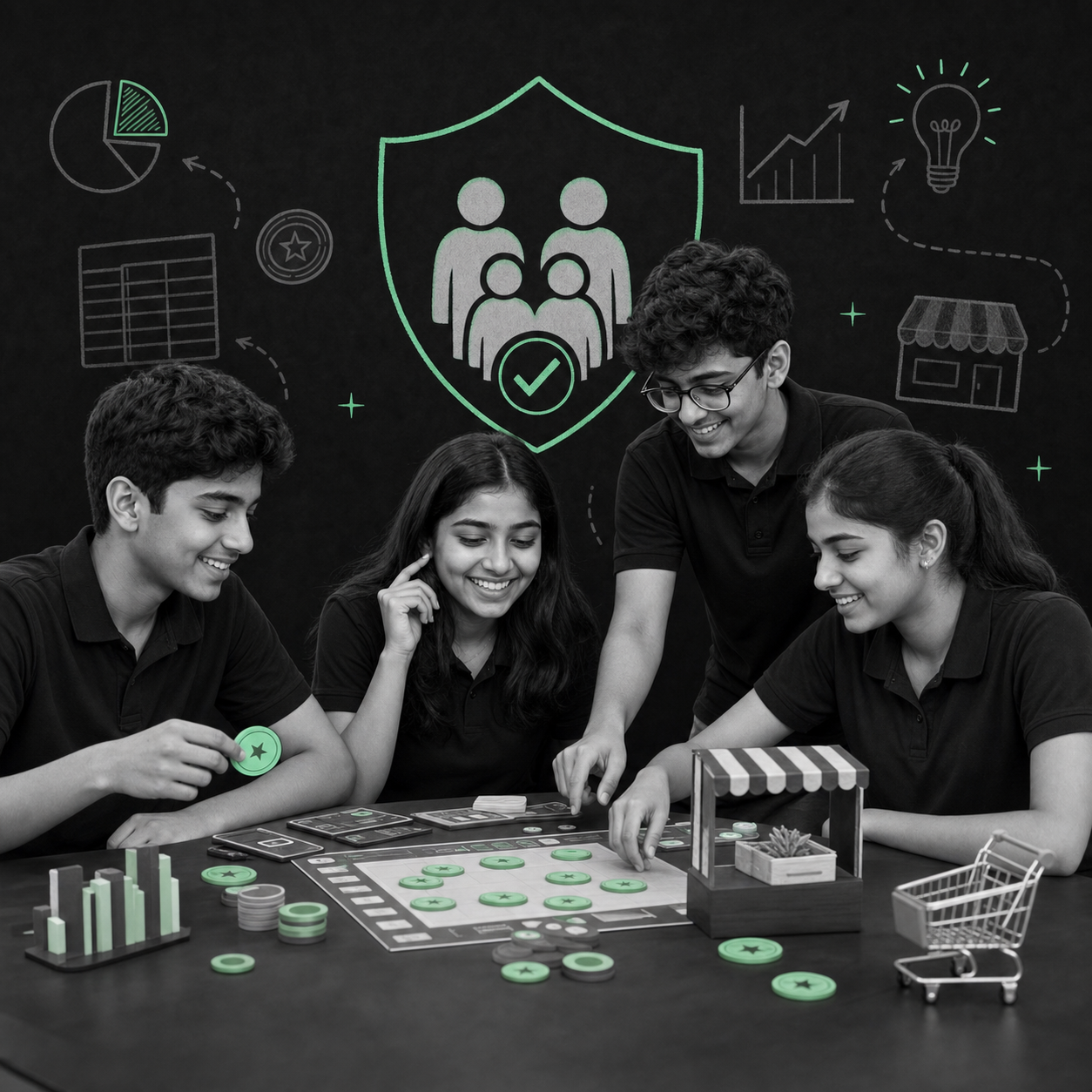
Venture Credits system
Students practice commercial thinking without cash-handling risk.

Primary + backup mentors
Sessions stay resilient even when one mentor drops out.

Documented curriculum
Parents can trust a repeatable learning design, not improvisation.
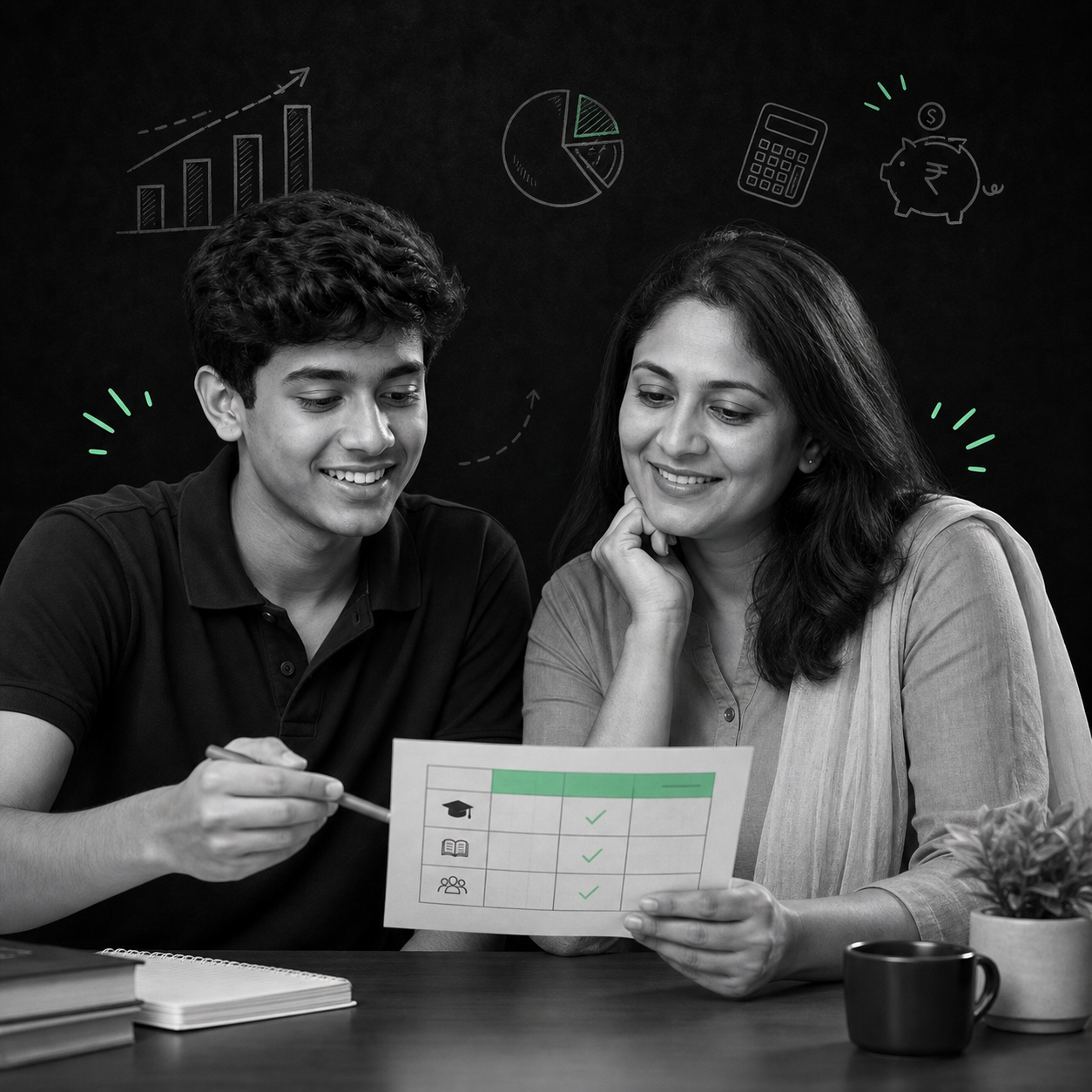
Per-term economics
Every term stands on its own without annual lock-in pressure.
Designed to build real entrepreneurial edge without taking anything away from school.
Parent trust
Families trust programs faster when the people around them reflect real operating experience, good judgment, and visible standards.

Kunal Vashisht
Founder, Hybrid Utopia
Technopreneur
Tech Advisor
Hybrid Utopia

Vishruti Ranpura
Business & Curriculum
Product & Strategy Lead
L&D Consultant
Behavioural Research

Dheeraj Pande
Business Finance, McDonald’s | Paytm
Product, Haier | Dabur
Strategy, TBO.com | KFC
McDonald’s | Paytm

Sudarshana Dutta
Career Development
Training & Consulting
Clinical Psychology, PhD
Interview Preparation

Deep Kakkad
2x in Entrepreneur.com
Top 30 Game-changers
3M+ Reach
Helping companies be AI-Powered

Sakshi Valecha
Founder’s Office, AtomicAds
Ex Astrotalk
Workflow & Operations
AtomicAds
...and 50+ startup founders
20
Situational questions in the Discovery Test
14
Behaviour dimensions scored in the report
3
Strength zones highlighted for the family
3
Growth zones turned into next-step coaching cues
1
Readiness index parents can understand at a glance
DISCOVERY DESK
A psychometric-style business aptitude report for Class 6 to 9, designed to show how a child thinks before asking for enrollment
See what parents receive
Our mentors are entrepreneurs who have raised capital, leaders working with Founders directly in fast growing startups
Know More->










Why families choose Cove
Cove is designed for families who want real skill-building without adding noise, pressure, or school-time conflict.
Built around school life
Sessions happen on weekends and during vacation windows so students can participate without weekday overload.
Visible progress every term
Each term ends with a clear artifact, presentation, or showcase moment that parents can actually see.
Real-world learning, age-appropriate pace
Students practice communication, research, creativity, and business thinking in a guided, school-safe format.
A three-term arc for every grade helps students grow from curiosity to venture thinking without adult startup pressure.
See Grade PathsClass 6
Curiosity, money basics, and first-sale confidence in a school-safe format.

Notice and question
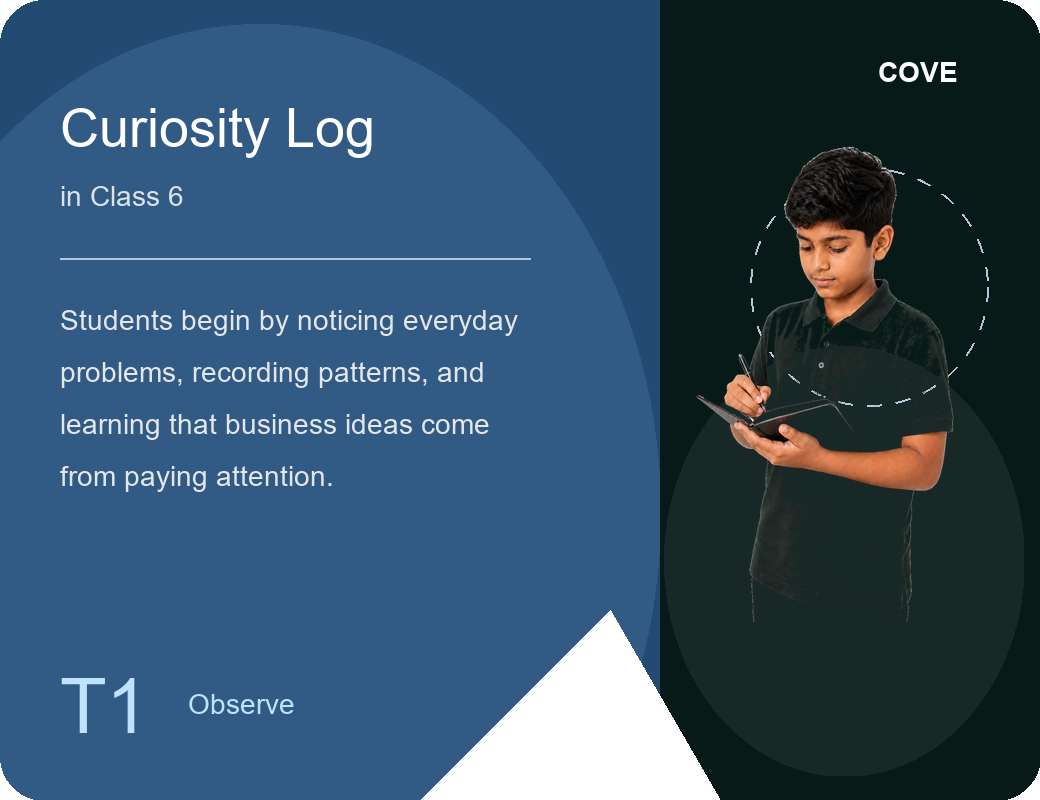
Students spot problems around them, keep observation notes, and learn that useful ideas begin with attention.
Term artifact
Observation journal
Make and test
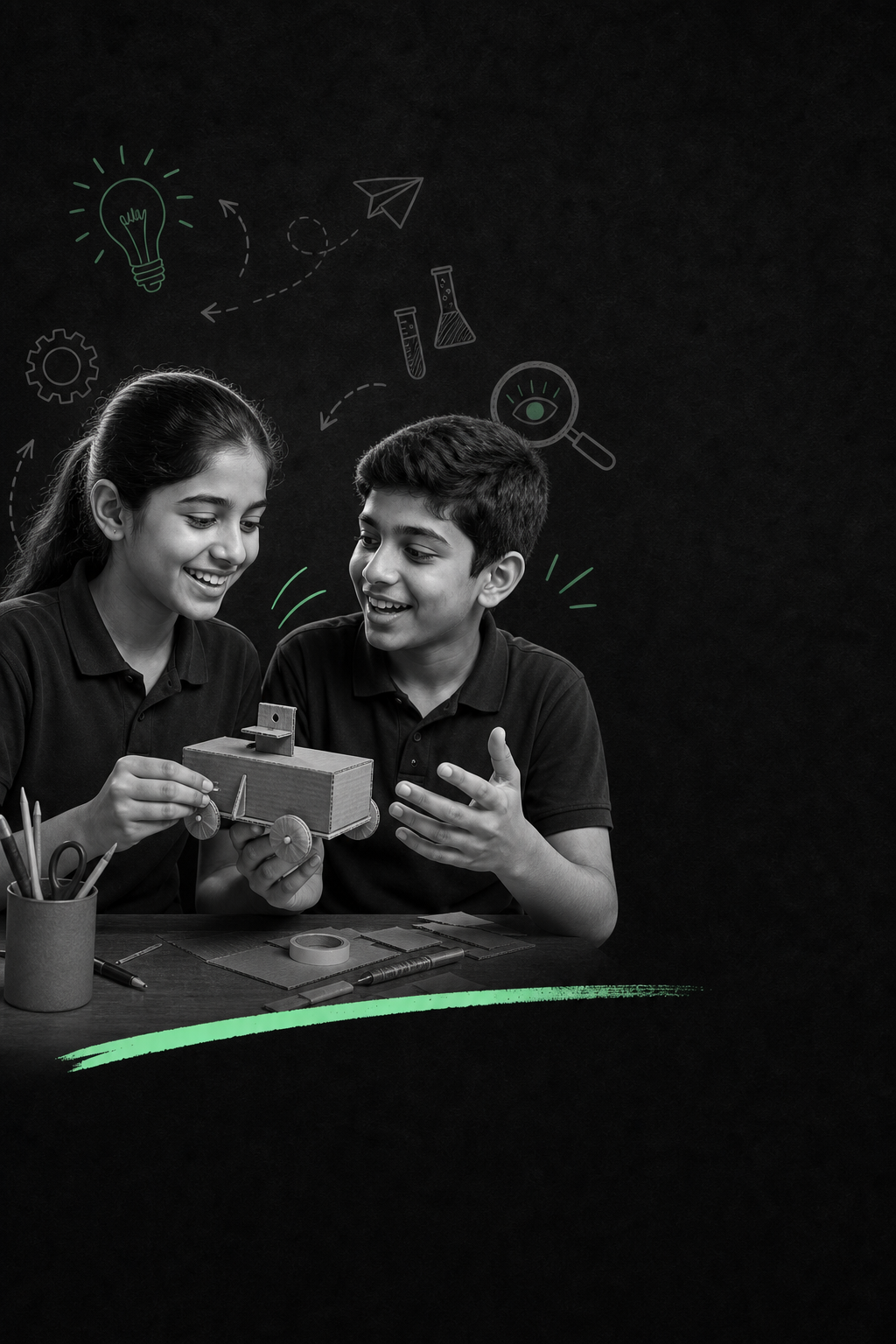
Students shape simple offers, talk to early customers, and practice explaining value with confidence.
Term artifact
Idea card + feedback sheet

Show first progress
Students complete a first-sale style capstone and reflect on what worked, what changed, and what they learned.
Term artifact
First-sale reflection
Notice and question
Students spot problems around them, keep observation notes, and learn that useful ideas begin with attention.
Term artifact
Observation journal
Make and test
Students shape simple offers, talk to early customers, and practice explaining value with confidence.
Term artifact
Idea card + feedback sheet
Show first progress
Students complete a first-sale style capstone and reflect on what worked, what changed, and what they learned.
Term artifact
First-sale reflection
Class 7
Interviews, surveys, pricing basics, and better questions before building.

Ask better questions
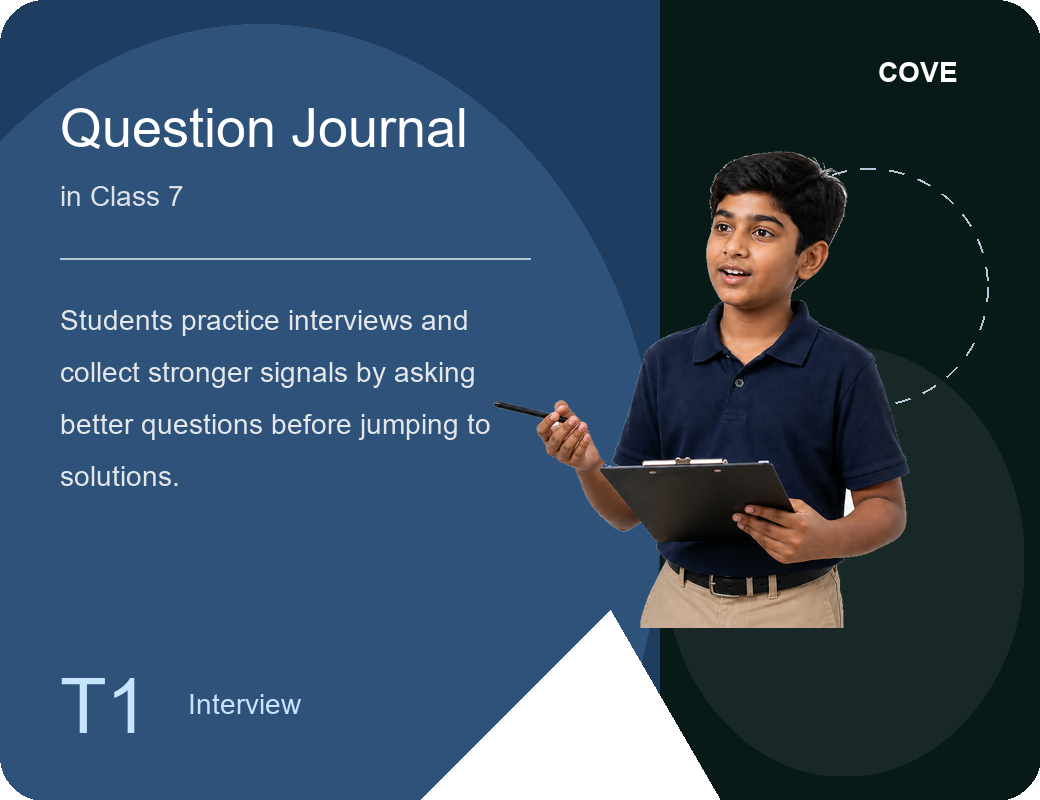
Students learn interview basics and how to collect signals from people instead of guessing.
Term artifact
Interview notebook

Read demand patterns
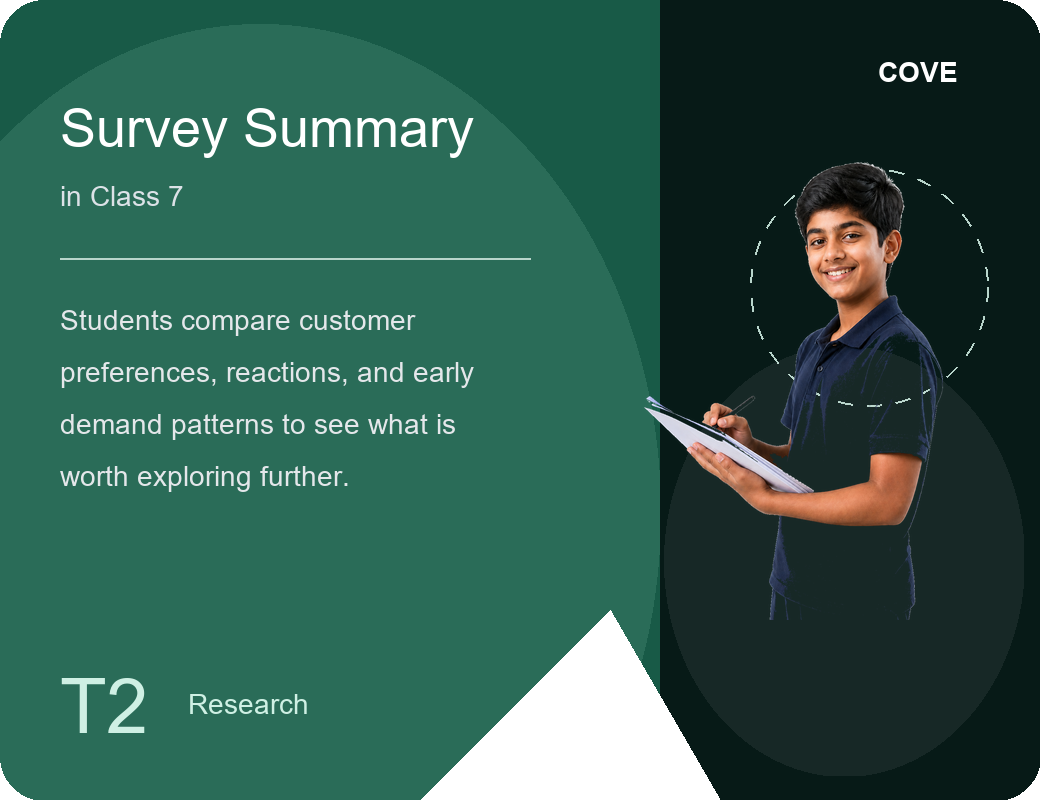
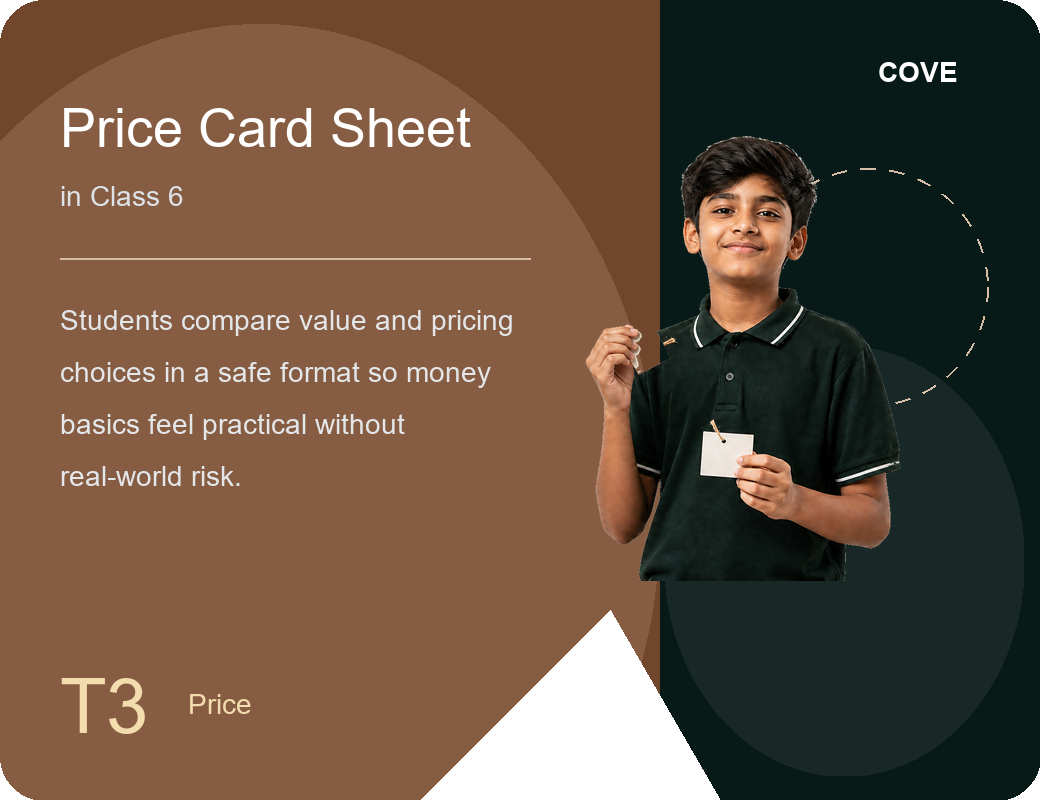
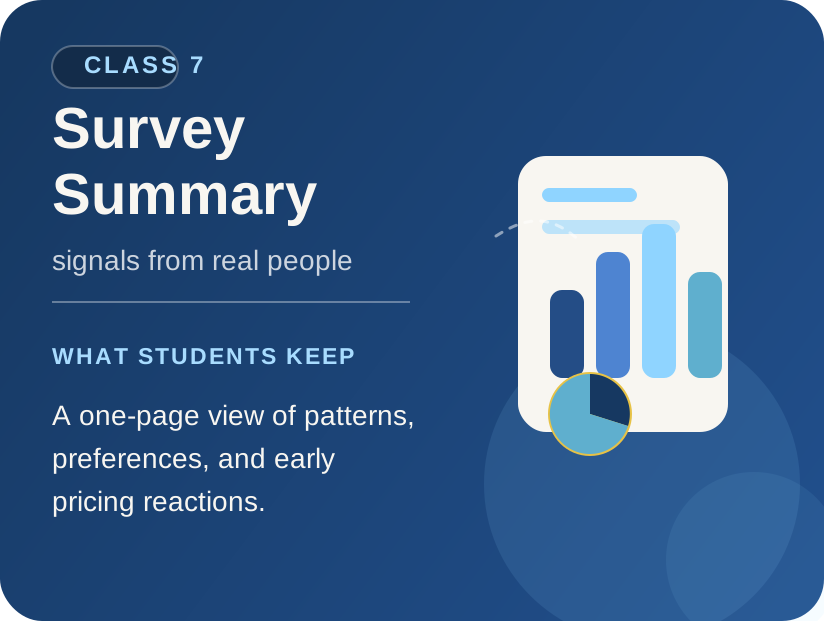
Students use simple surveys and sheets to compare needs, preferences, and early pricing reactions.
Term artifact
Survey summary

Test practical offers
Students evaluate what people actually want and turn research into clearer, more grounded ideas.
Term artifact
Research one-pager
Ask better questions
Students learn interview basics and how to collect signals from people instead of guessing.
Term artifact
Interview notebook
Read demand patterns
Students use simple surveys and sheets to compare needs, preferences, and early pricing reactions.
Term artifact
Survey summary
Test practical offers
Students evaluate what people actually want and turn research into clearer, more grounded ideas.
Term artifact
Research one-pager
Class 8
Design thinking, branding, content, and launch-ready communication.
Shape the idea
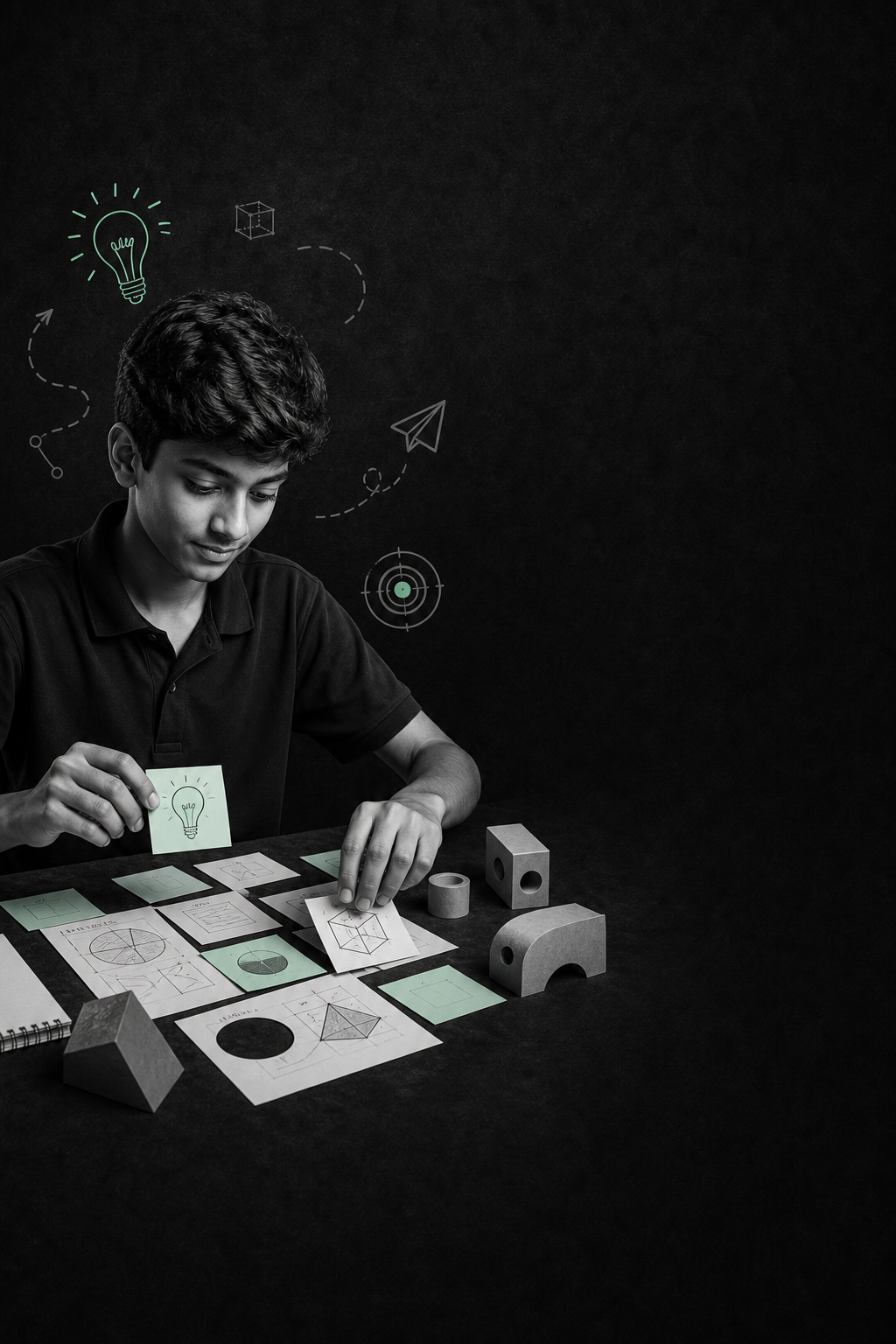
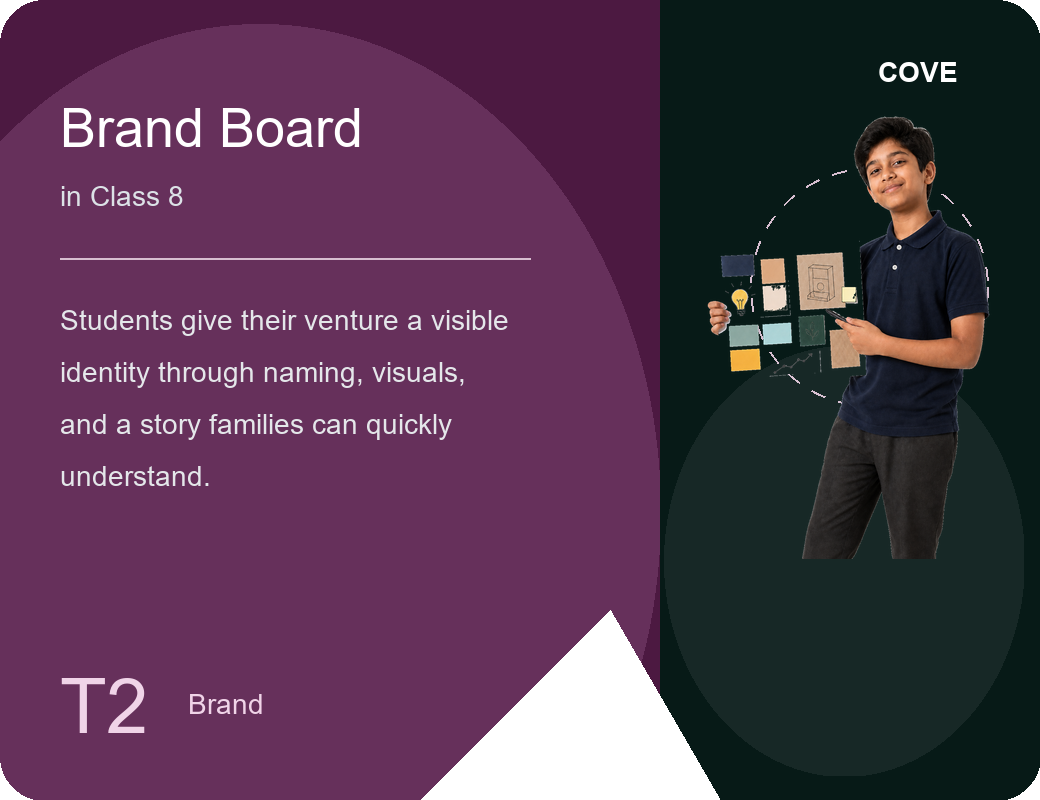
Students organize rough concepts with empathy mapping, naming, and simple prototyping exercises.
Term artifact
Concept board
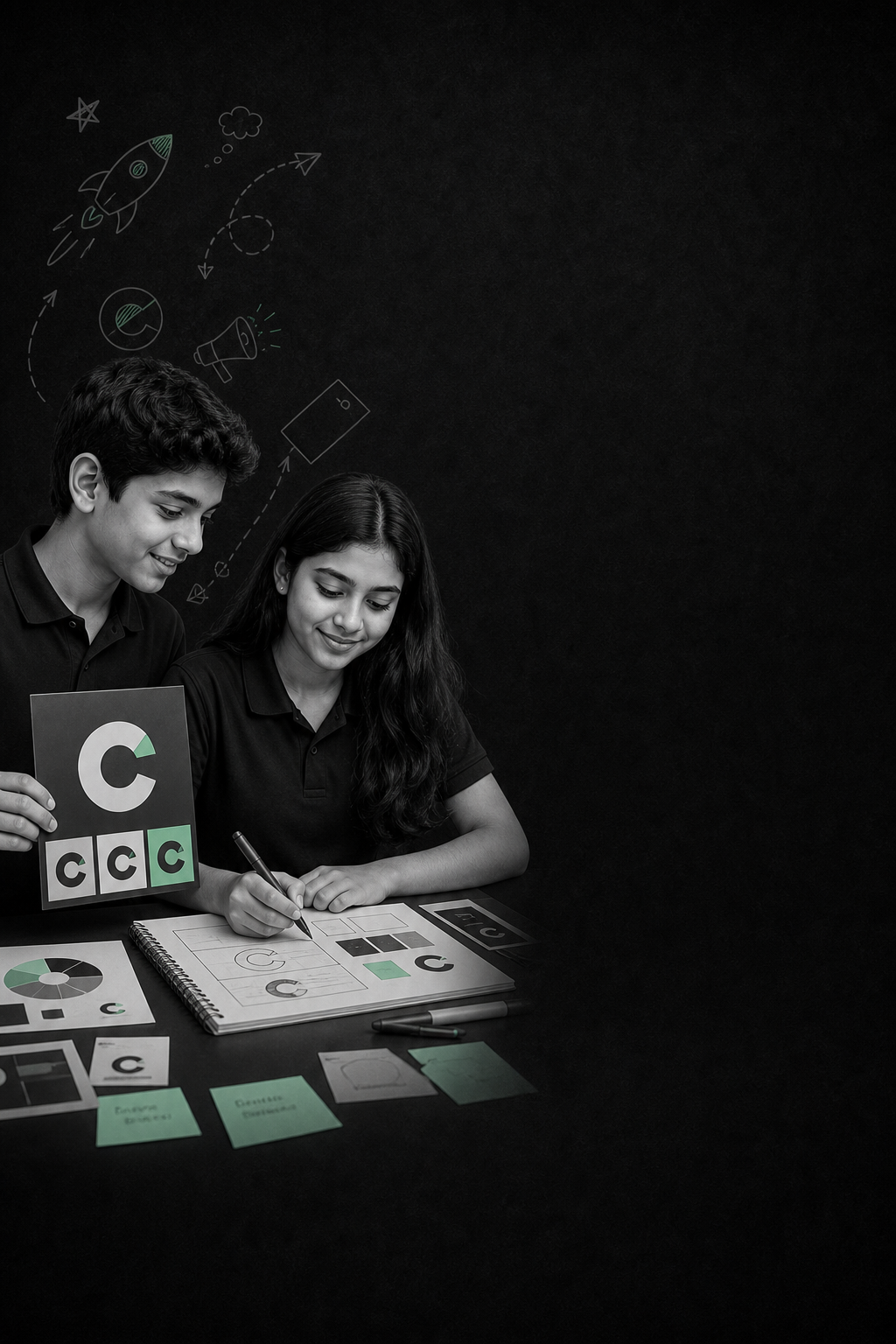
Build the brand
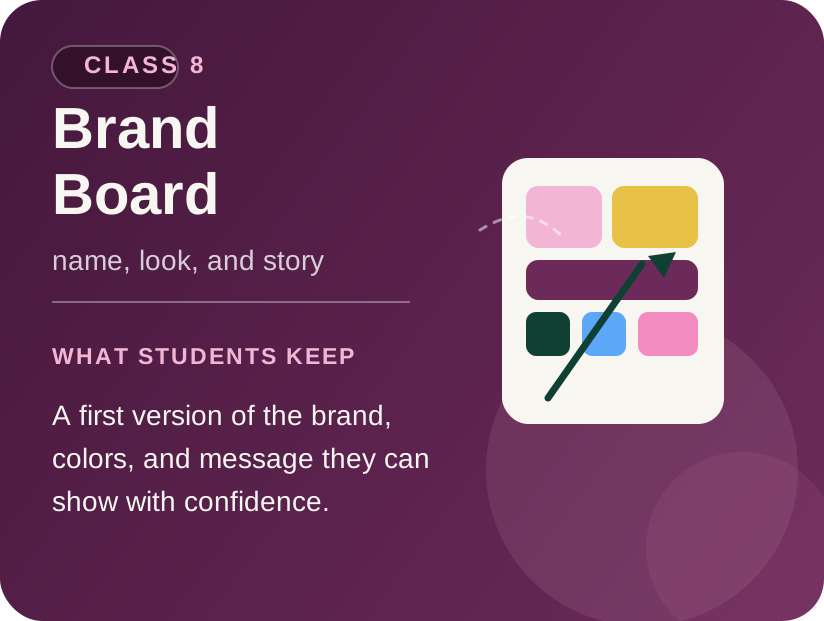
Students create visual identity, messaging, and a clearer story that helps others understand the venture.
Term artifact
Mini brand book

Launch with clarity
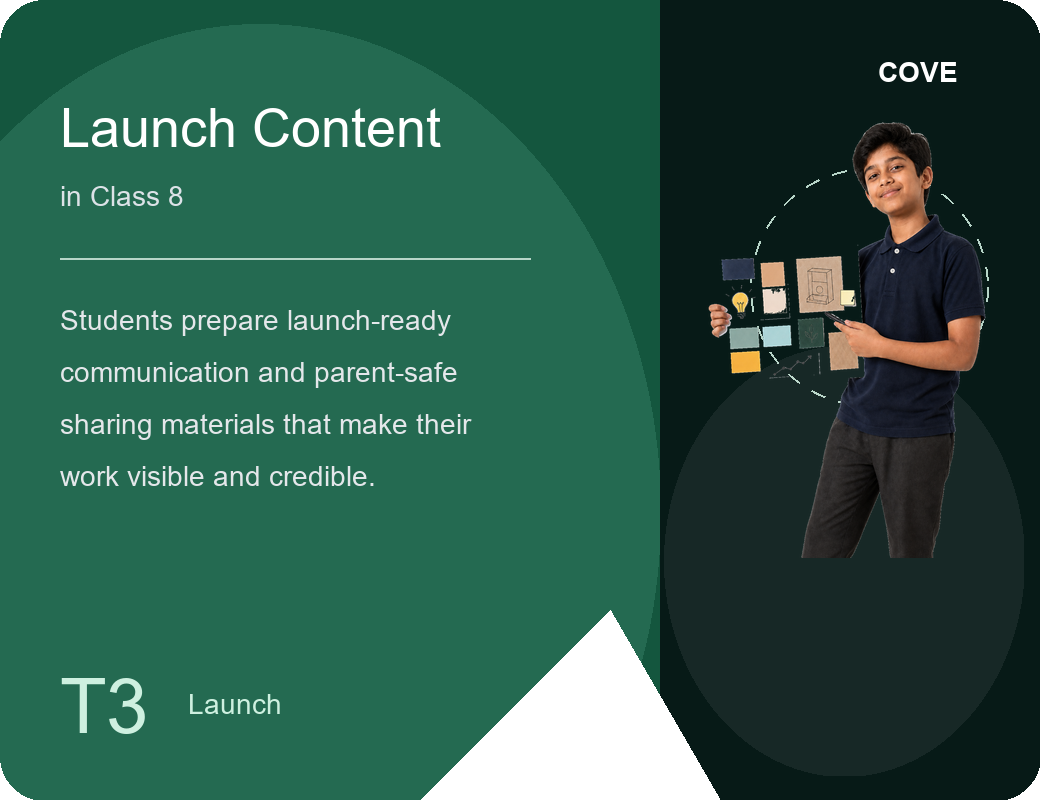
Students prepare launch content and parent-safe sharing materials that make their work visible and credible.
Term artifact
Launch content set
Shape the idea
Students organize rough concepts with empathy mapping, naming, and simple prototyping exercises.
Term artifact
Concept board
Build the brand
Students create visual identity, messaging, and a clearer story that helps others understand the venture.
Term artifact
Mini brand book
Launch with clarity
Students prepare launch content and parent-safe sharing materials that make their work visible and credible.
Term artifact
Launch content set
Class 9
Business models, finance basics, growth thinking, and showcase planning.
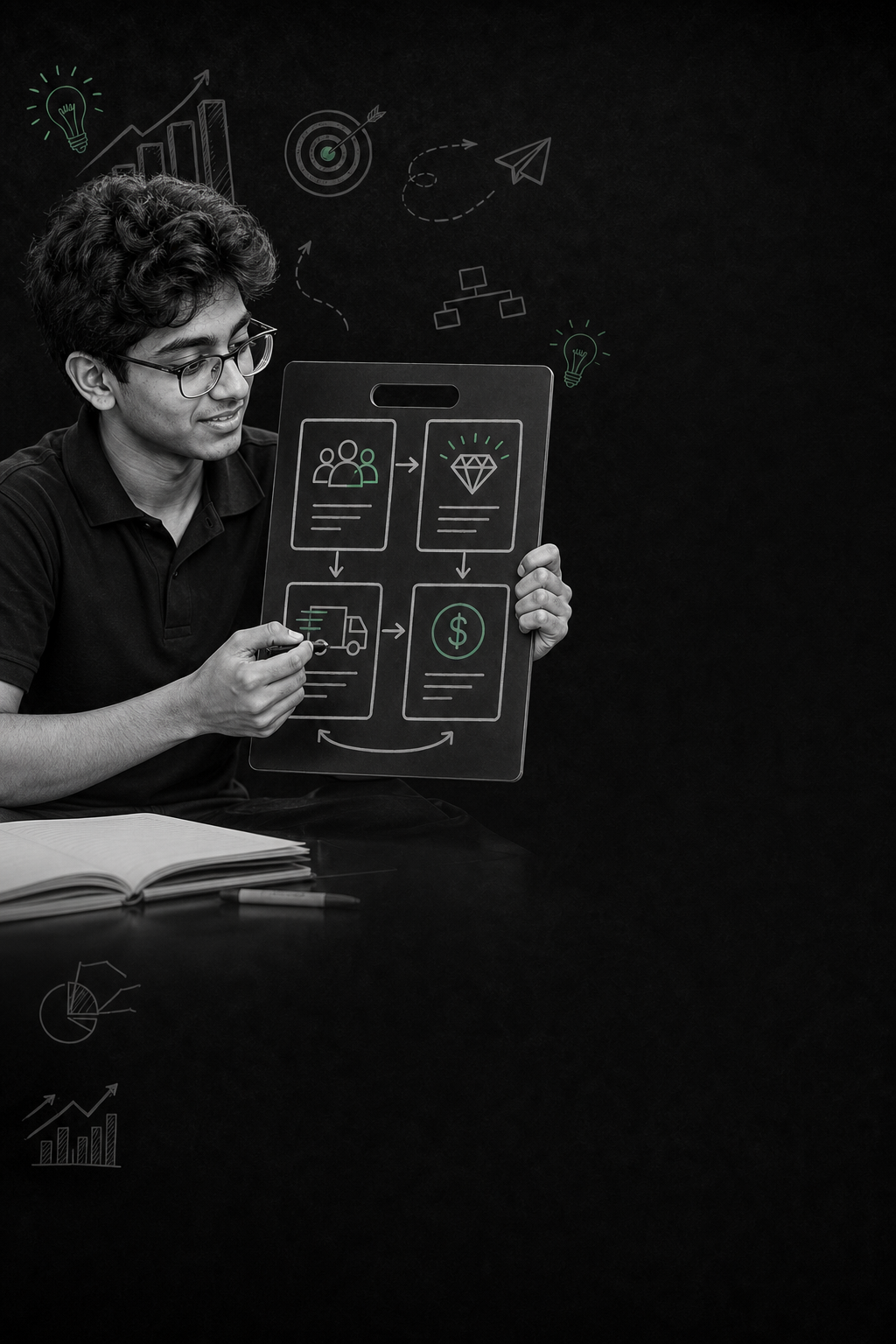
Map how it works
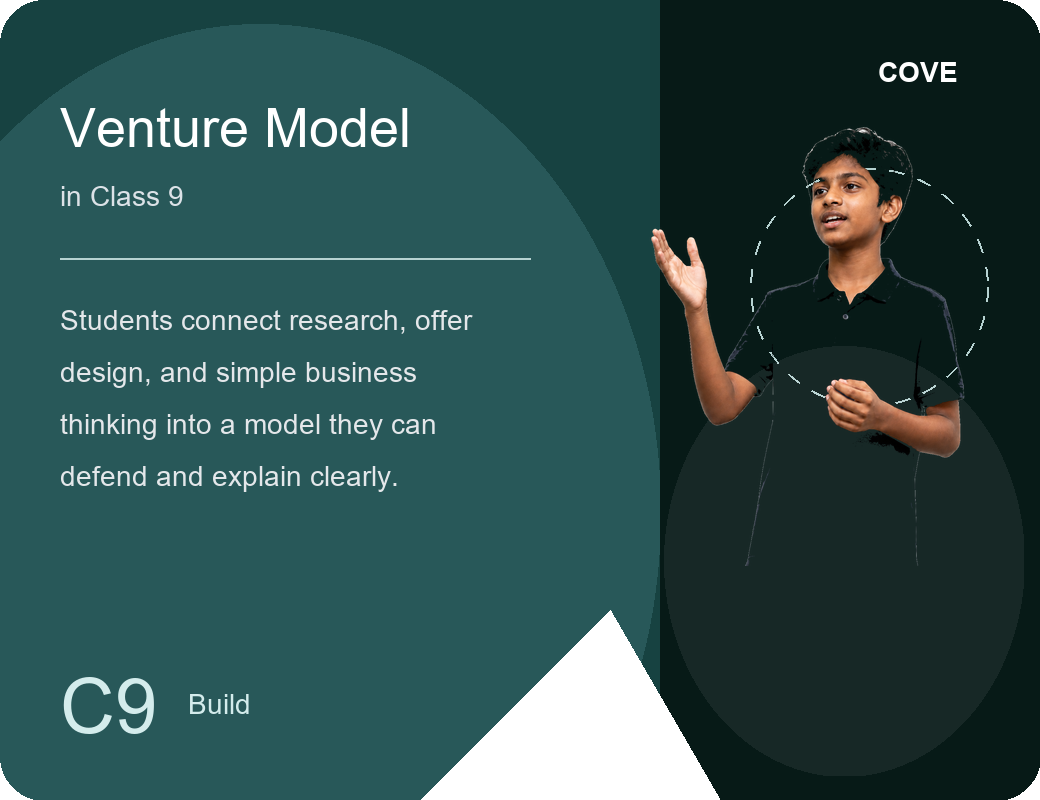
Students connect customers, value, channels, and revenue into a simple venture model they can explain.
Term artifact
Business model canvas

Track money and growth
Students practice pricing, budgeting, and basic performance thinking in an age-appropriate format.
Term artifact
Budget tracker

Present the venture
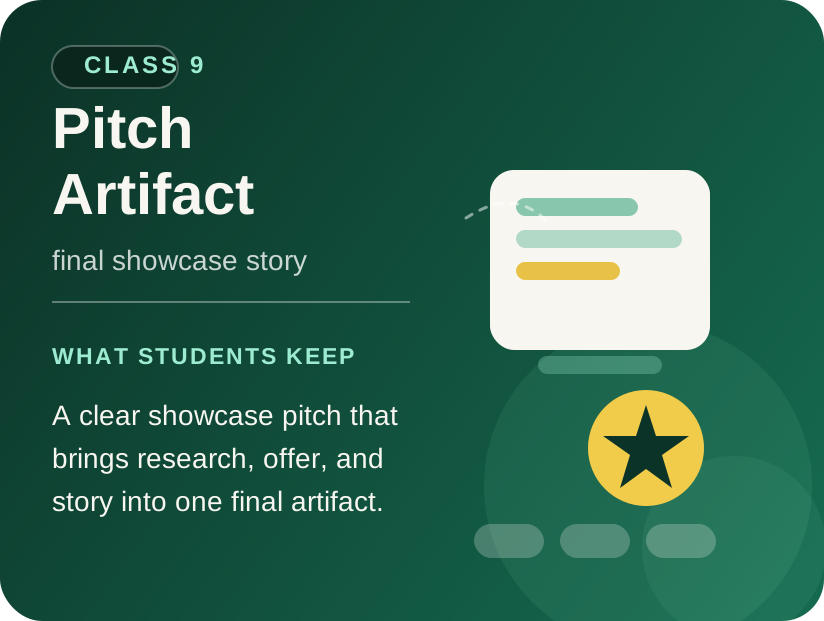
Students prepare their final showcase narrative with proof, reflections, and next-step thinking.
Term artifact
Showcase presentation
Map how it works
Students connect customers, value, channels, and revenue into a simple venture model they can explain.
Term artifact
Business model canvas
Track money and growth
Students practice pricing, budgeting, and basic performance thinking in an age-appropriate format.
Term artifact
Budget tracker
Present the venture
Students prepare their final showcase narrative with proof, reflections, and next-step thinking.
Term artifact
Showcase presentation
A glimpse into the student milestones, parent-safe structure, and small wins that define a Cove term.
Explore More Term 1
The Observer arc
Class 6
Students start by spotting problems around them, journaling observations, and learning that ideas come from paying attention.
Builds
Curiosity
Artifact
Observation journal
 Term 2
The Explorer arc
Class 7
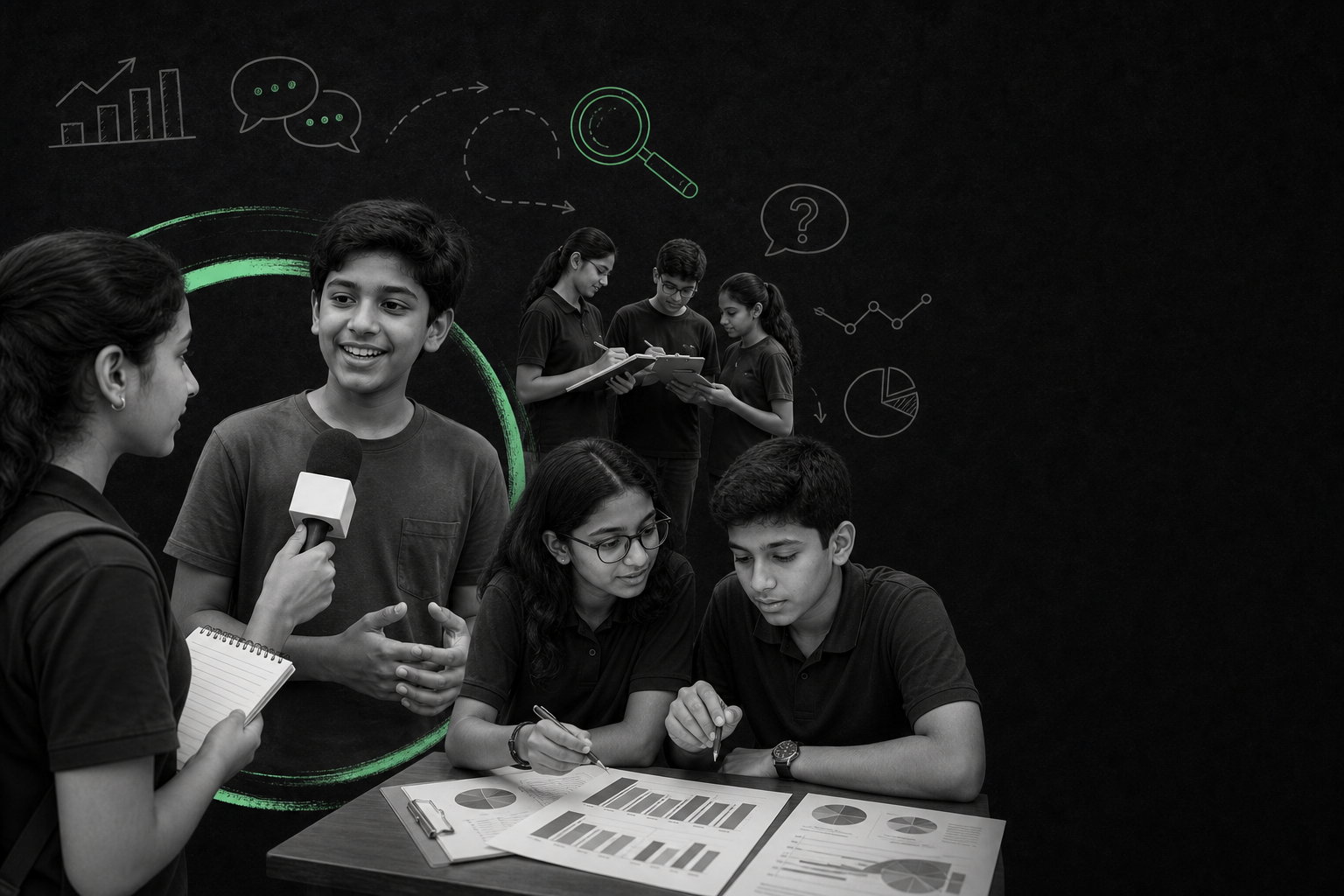
Students run simple interviews and surveys, learn how to ask better questions, and test ideas before they build them.
Builds
Research habit
Artifact
Research summary
 Term 3
The Creator arc
Class 8
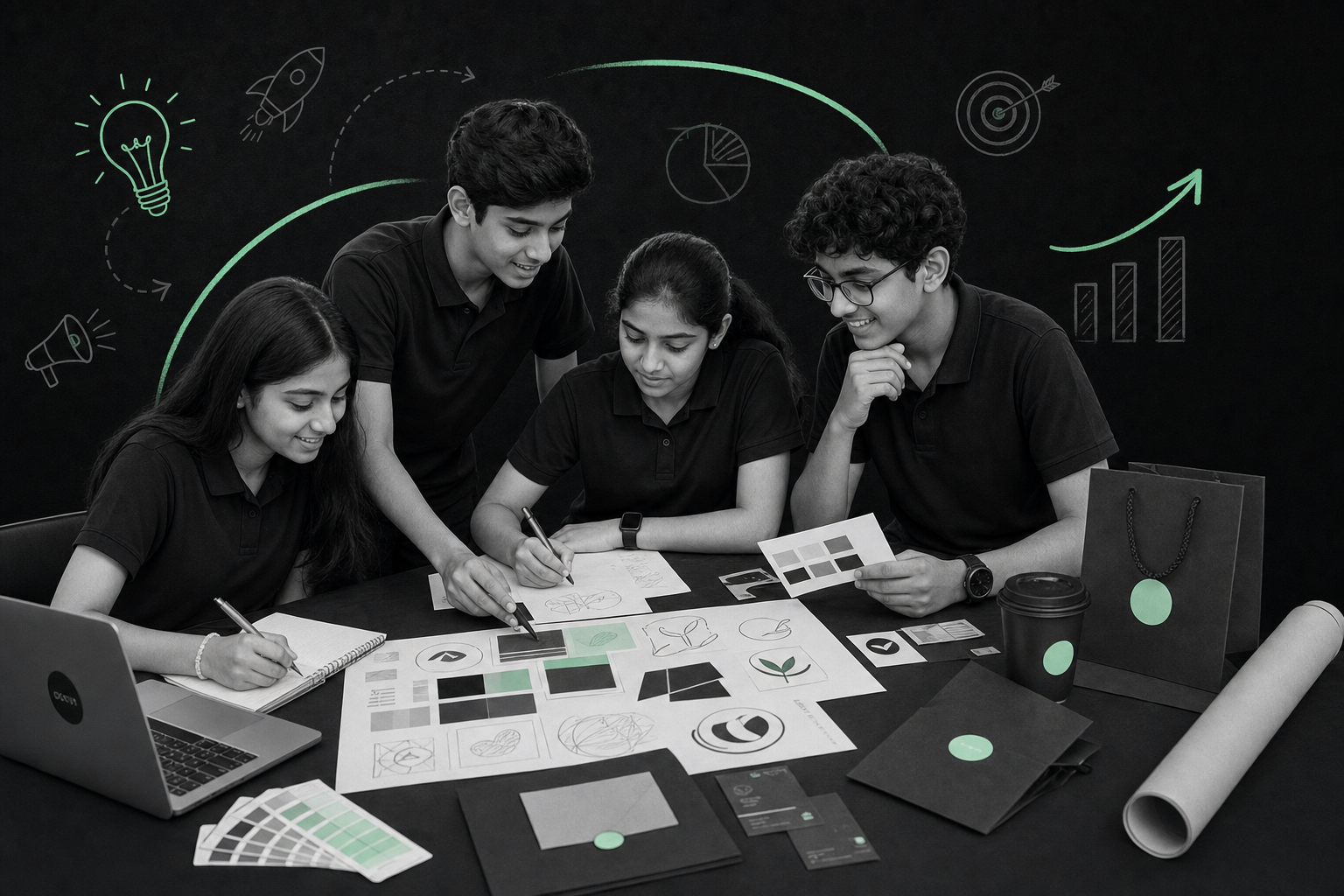
Students turn concepts into visible brands, stories, and launch materials using simple tools and parent-safe channels.
Builds
Branding basics
Artifact
Brand book
 Showcase Day
The Builder arc
Class 9
Students finish with a venture model, budgeting basics, and a showcase presentation that explains what they built and why.
Builds
Business thinking
Artifact
Venture plan
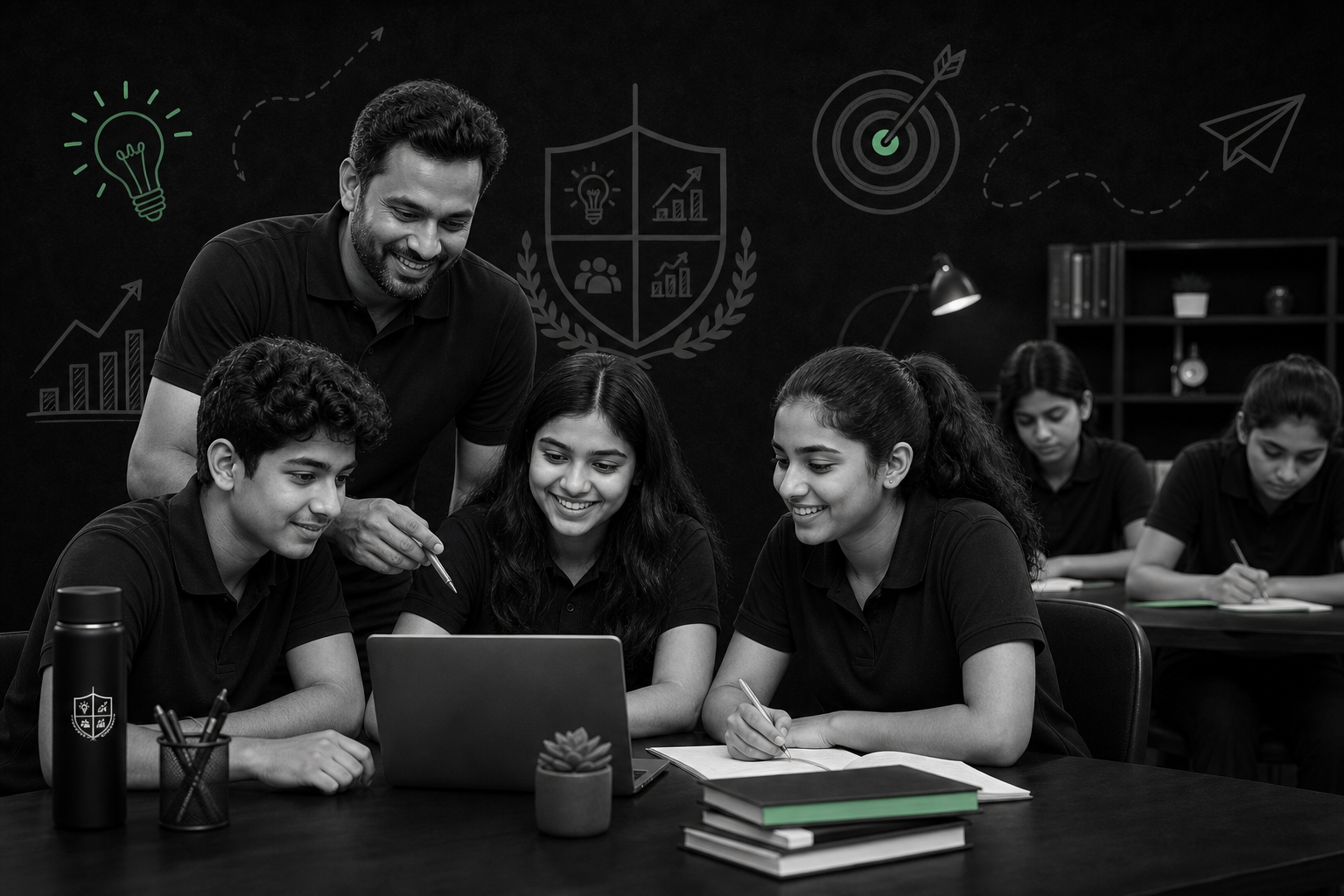 Parent-safe
The Cove promise
Across all grades
The program is designed so practice feels real, but the risk stays bounded through Venture Credits, weekends-only scheduling, and structured mentorship.
Builds
Confidence
Format
Weekends only
Term 1The Observer arc
Class 6
Students start by spotting problems around them, journaling observations, and learning that ideas come from paying attention.
Builds
Curiosity
Artifact
Observation journal
Term 2The Explorer arc
Class 7
Students run simple interviews and surveys, learn how to ask better questions, and test ideas before they build them.
Builds
Research habit
Artifact
Research summary
Term 3The Creator arc
Class 8
Students turn concepts into visible brands, stories, and launch materials using simple tools and parent-safe channels.
Builds
Branding basics
Artifact
Brand book
Showcase DayThe Builder arc
Class 9
Students finish with a venture model, budgeting basics, and a showcase presentation that explains what they built and why.
Builds
Business thinking
Artifact
Venture plan
Parent-safeThe Cove promise
Across all grades
The program is designed so practice feels real, but the risk stays bounded through Venture Credits, weekends-only scheduling, and structured mentorship.
Builds
Confidence
Format
Weekends only
Each term ends with a parent- and mentor-facing showcase where students present what they built, what they learned, and how they improved.
1
Showcase every term
2
Hours each weekend session
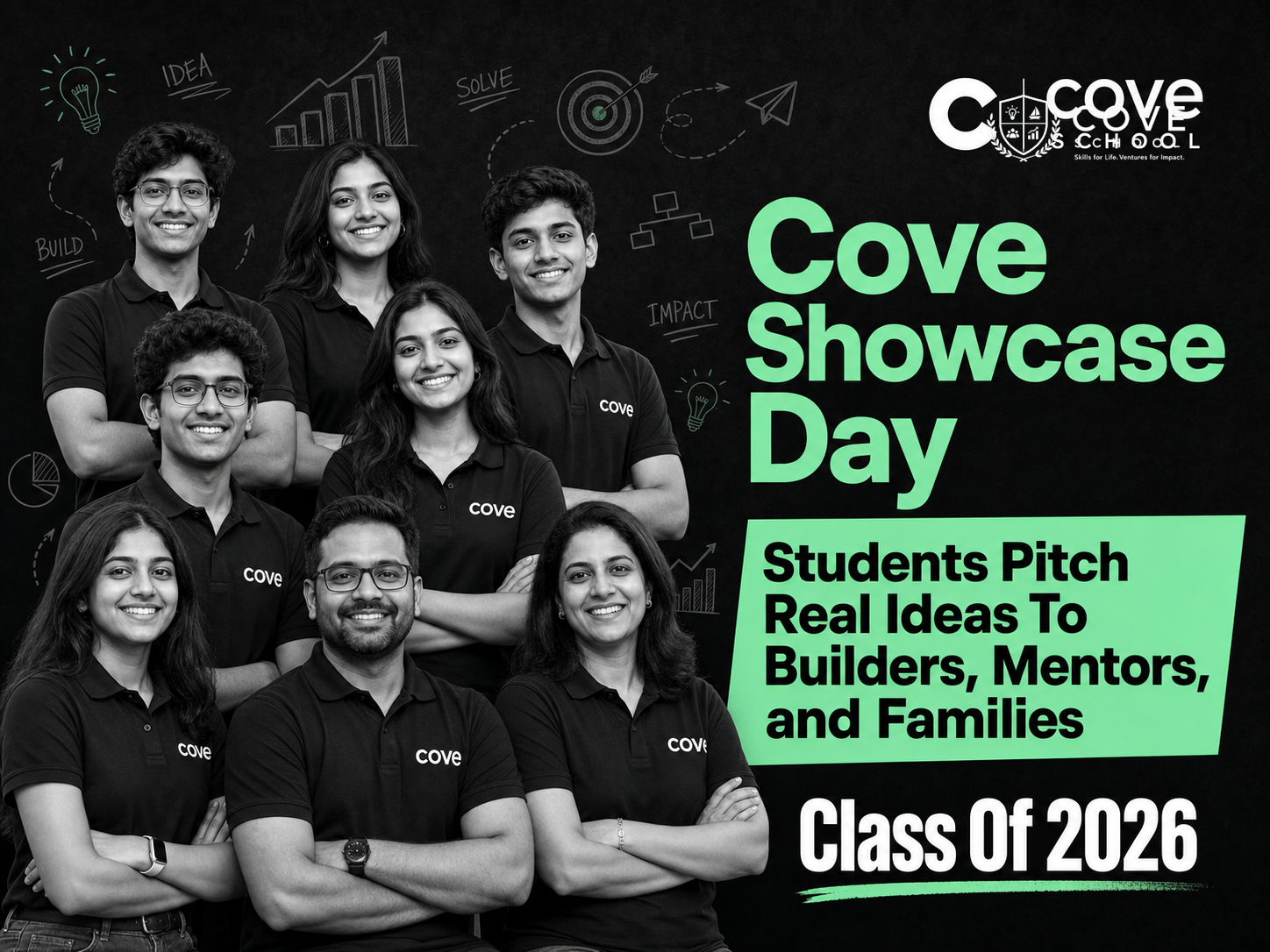
A visible term-end milestone for students, parents, and mentors
Free tools at launch
Cove's launch stack brings together practical free-plan tools that help a solo founder research, design, launch, capture leads, and automate early operations.
 OpenAI
 Claude
 Gemini
 Perplexity
 Grammarly
 Canva
Canva Figma
Figma Notion
 Google Drive
 Photopea
 GIMP
GIMP Calendly
 Google Forms
 Google Sheets
 Linktree
 Airtable
 Zapier
 MakeNotionGoogle Sheets
 n8n
n8n IFTTT
IFTTT PayPal
 Square
 HubSpot CRMNotion CRM
 Trello
 Asana
Asana ClickUp
 Jira
Jira TodoistAirtable
 WordPress
 Wix
Wix GitHub PagesCanva Sites
 Google Business
 Loom
Loom Mailchimp
 Beehiiv
 Substack
 BufferCalendlyHubSpot Meetings
 Google Calendar
 Google Meet
 Zoom
Zoom Slack
Slack Teams
Teams Discord
 WhatsApp BusinessGoogle Drive
 Dropbox
 OneDrive
 Box
Box WeTransfer
 Analytics
 DocuSignGoogle FormsHubSpot Service
Program Details
Real ventures, not case studies
Students build age-appropriate ventures instead of only discussing companies from a distance.
Weekend-only, zero exam conflict
The format is designed to fit around school and tuition rather than compete with them.
Every term ends in a showcase
Each cohort leaves with a visible artifact, presentation, or parent-facing milestone.
Venture Credits, not cash risk
Commercial thinking is practiced through a safe simulation model by design.
Primary + backup mentor system
Sessions are built to stay resilient even when one mentor cannot make it.
Per-term economics, no forced lock-in
Every term stands on its own so renewals are upside, not a survival requirement.
Parent assurance
Cove is built so families can say yes with confidence: the schedule is bounded, the format is supervised, and student progress stays visible throughout the term.
No school-time conflict
Weekend-first delivery protects regular academics and tuition schedules.
Families do not have to trade core school priorities for this program.
Guided, age-appropriate practice
Students learn through structured activities, mentor support, and gradual responsibility.
The experience stays exciting without becoming overwhelming.
Visible outcomes for parents
Artifacts, showcase moments, and reflections make growth easy to follow.
Parents can see what was learned, built, and improved each term.
Safe commercial learning
Business concepts are practiced in a supervised, parent-safe format designed for school-age learners.
The focus stays on judgment, creativity, and confidence.
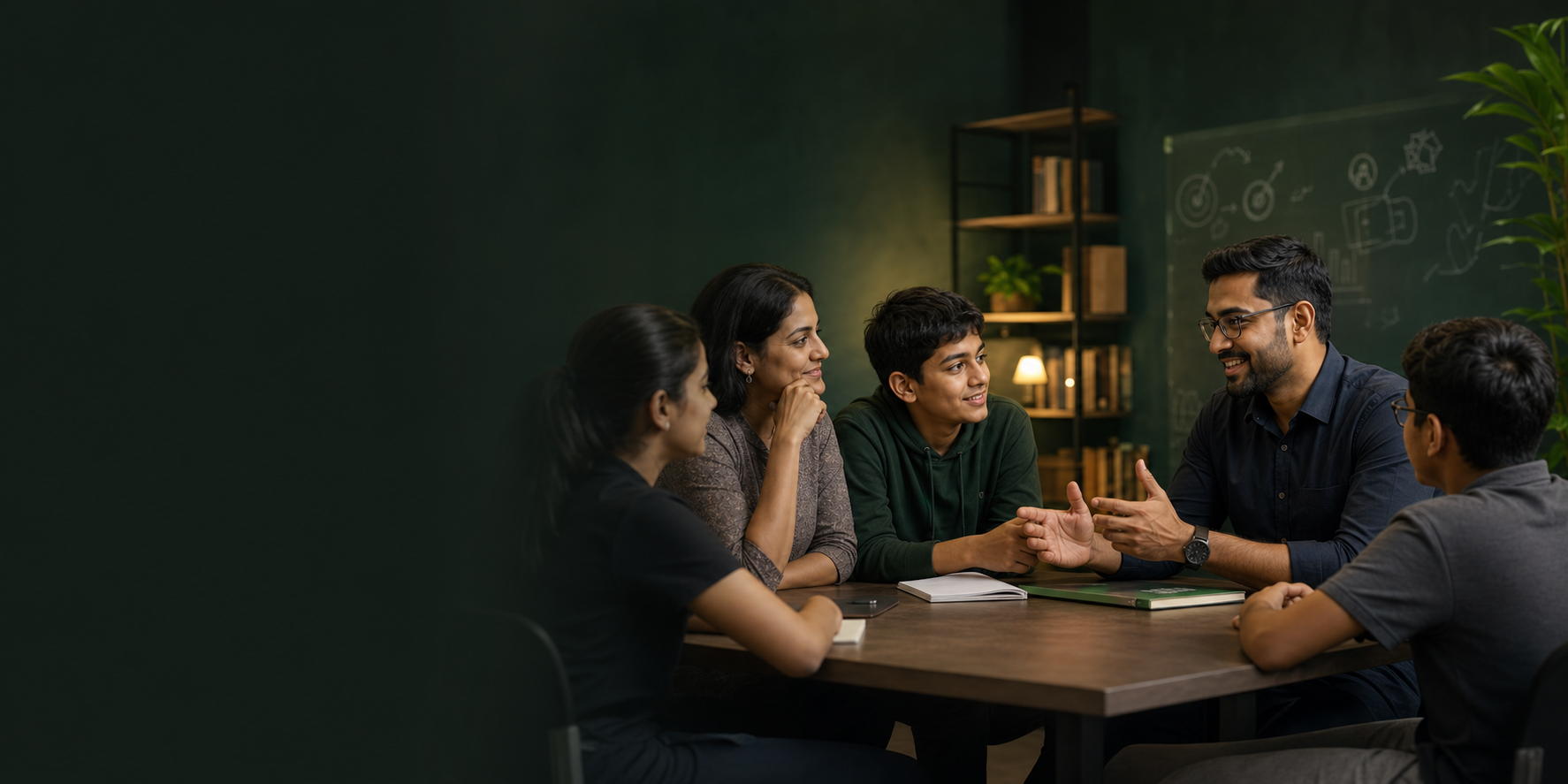
Why parents say yes
No weekday overlap
Weekend and vacation delivery only
Documented curriculum
Transparent and reusable
No capital exposure
Venture Credits keep risk bounded
Standalone term economics
No dependence on long-term lock-in
The journey compounds year by year, but every term still has its own finish line and artifact.
by Cove mentors
OVERVIEW
Students learn to notice unmet needs, capture observations, and turn curiosity into the first shape of a venture idea.

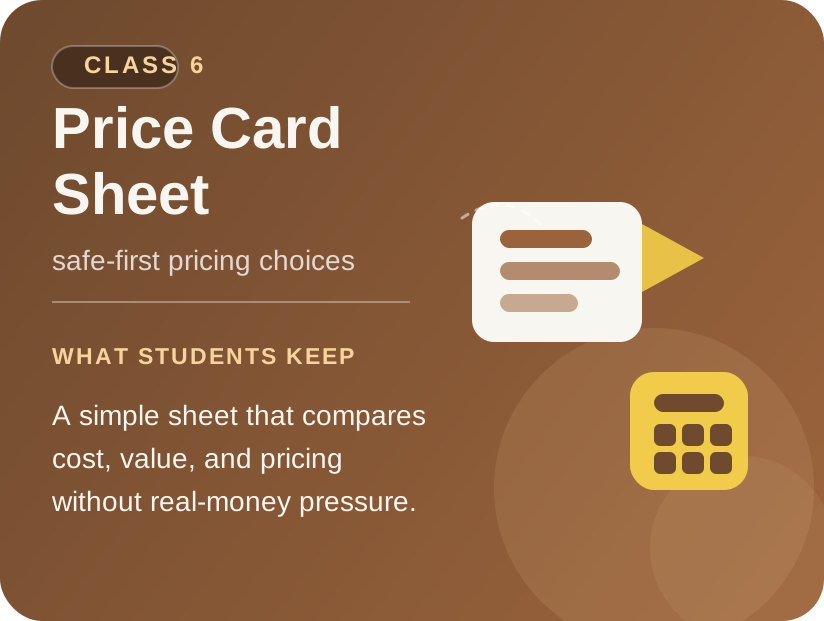
safe-first pricing practice
OVERVIEW
Students compare costs, value, and simple pricing choices without the risk of real-money pressure or confusion.

interviews before answers
OVERVIEW
Students learn how to interview with empathy, collect signal, and avoid guessing what people really need.

surveys with real comparisons
OVERVIEW
Students compare choices, reactions, and early price responses to find where interest is strong enough to explore.

make the idea visible
OVERVIEW
Students craft names, visuals, and launch messages so a simple venture can feel real to families and mentors.

confidence with proof
OVERVIEW
Students bring research, brand, and offer design into one clear showcase story they can present with confidence.

by Cove mentors
OVERVIEW
Students learn to notice unmet needs, capture observations, and turn curiosity into the first shape of a venture idea.
safe-first pricing practice
OVERVIEW
Students compare costs, value, and simple pricing choices without the risk of real-money pressure or confusion.
interviews before answers
OVERVIEW
Students learn how to interview with empathy, collect signal, and avoid guessing what people really need.
surveys with real comparisons
OVERVIEW
Students compare choices, reactions, and early price responses to find where interest is strong enough to explore.
make the idea visible
OVERVIEW
Students craft names, visuals, and launch messages so a simple venture can feel real to families and mentors.
confidence with proof
OVERVIEW
Students bring research, brand, and offer design into one clear showcase story they can present with confidence.
What students actually learn
Problem spotting
Learn to notice opportunities in everyday life.
Customer research
Ask better questions before building anything.
Brand and communication
Give ideas a visible identity and message.
Money basics
Practice pricing, budgeting, and tradeoffs safely.
Safety system
Students still plan, price, negotiate, track demand, and present outcomes. The difference is that the ledger is simulated, and any real sale stays under parent control rather than becoming student cash handling inside the program.
Step 1
Plan
Students define product, price, and simple demand assumptions.
Step 2
Track
Credits, ledgers, and reflection sheets capture what happened.
Step 3
Reflect
Families see learning outcomes without exposing minors to cash risk.
The outputs are intentionally tangible so students leave each term with something they can show and explain.
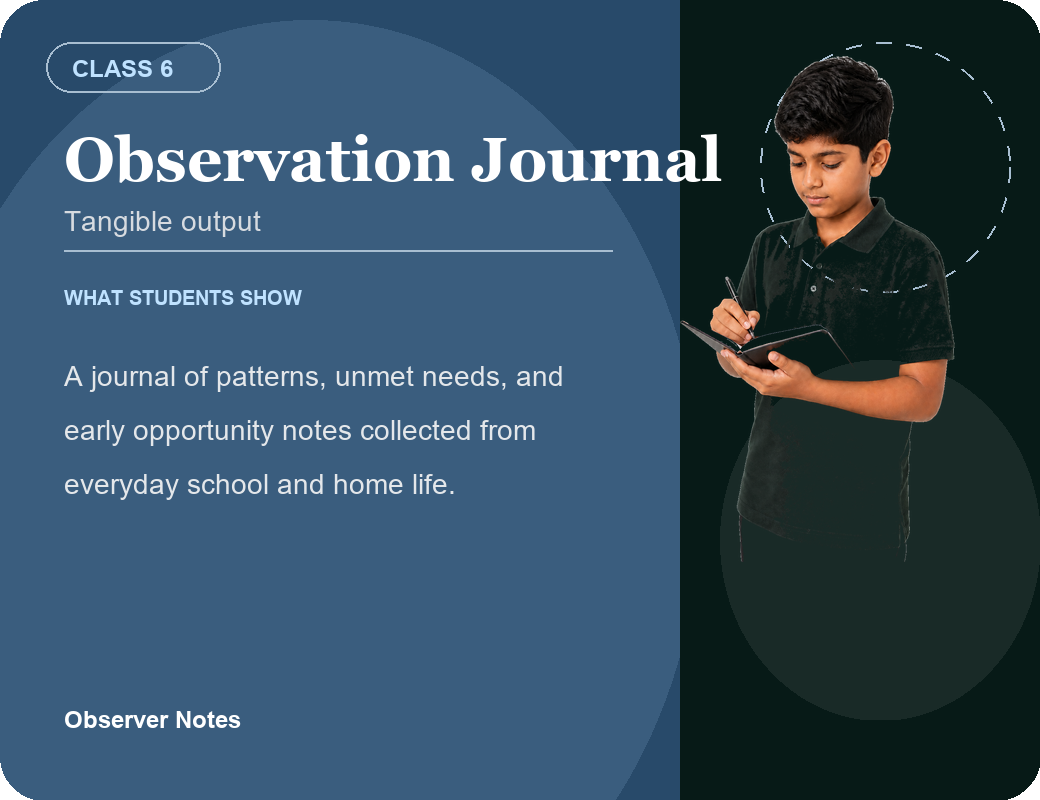
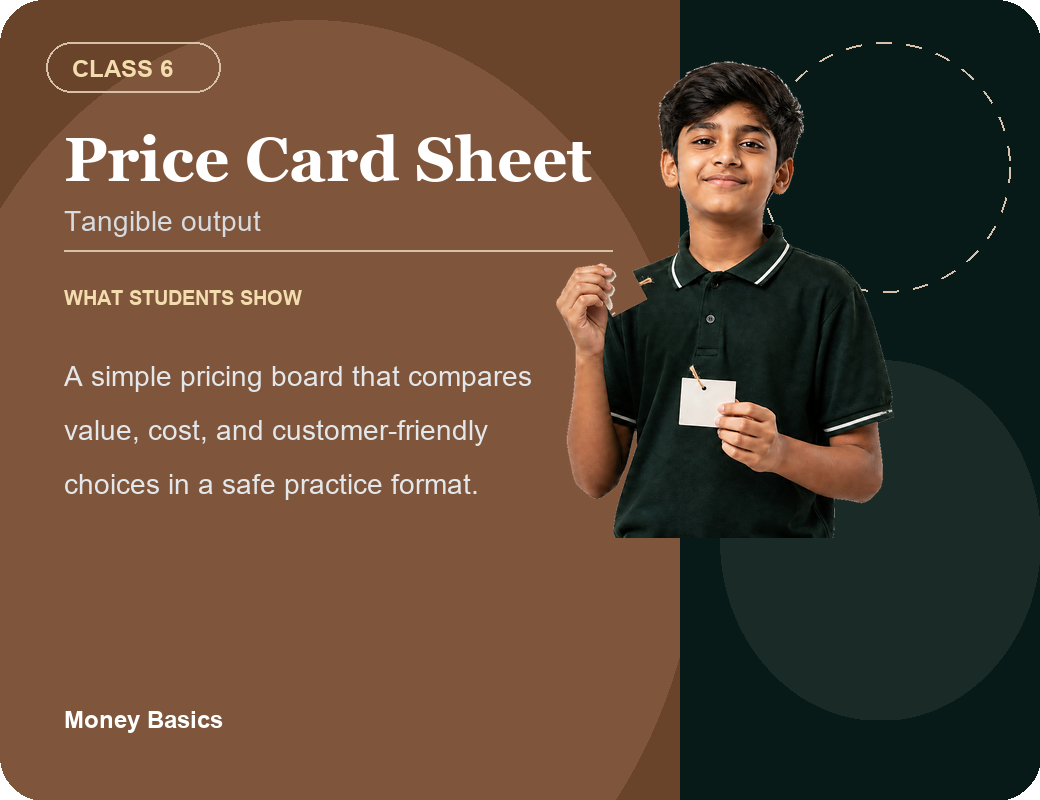
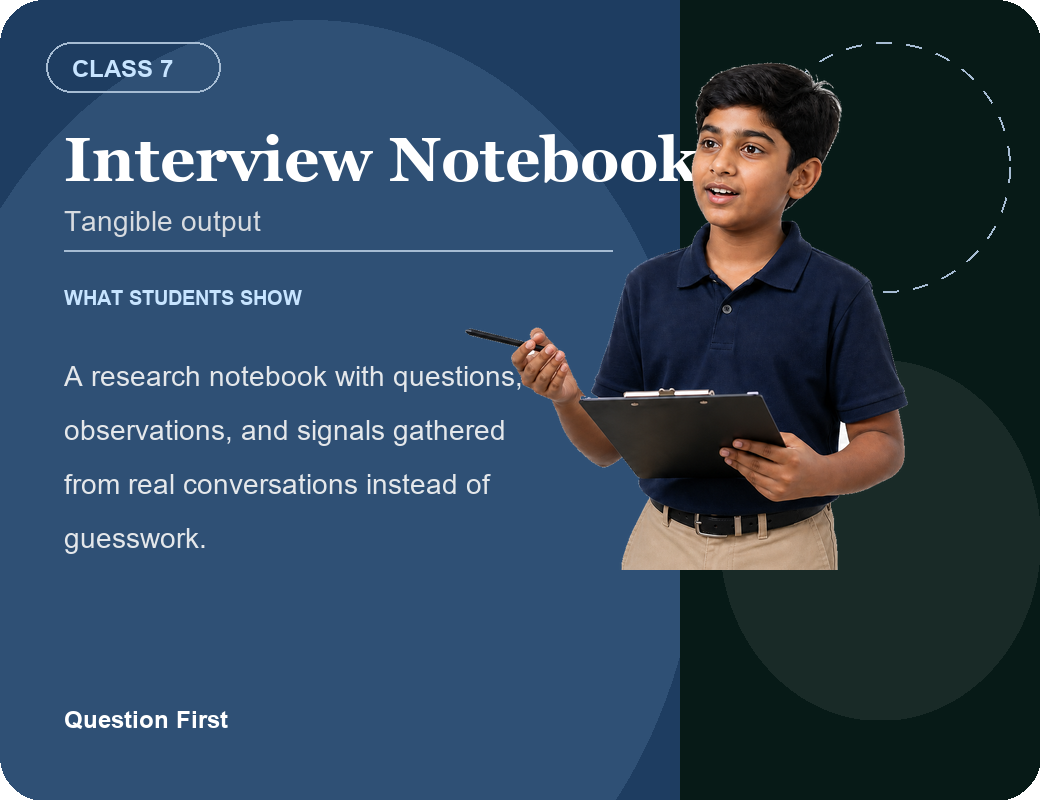
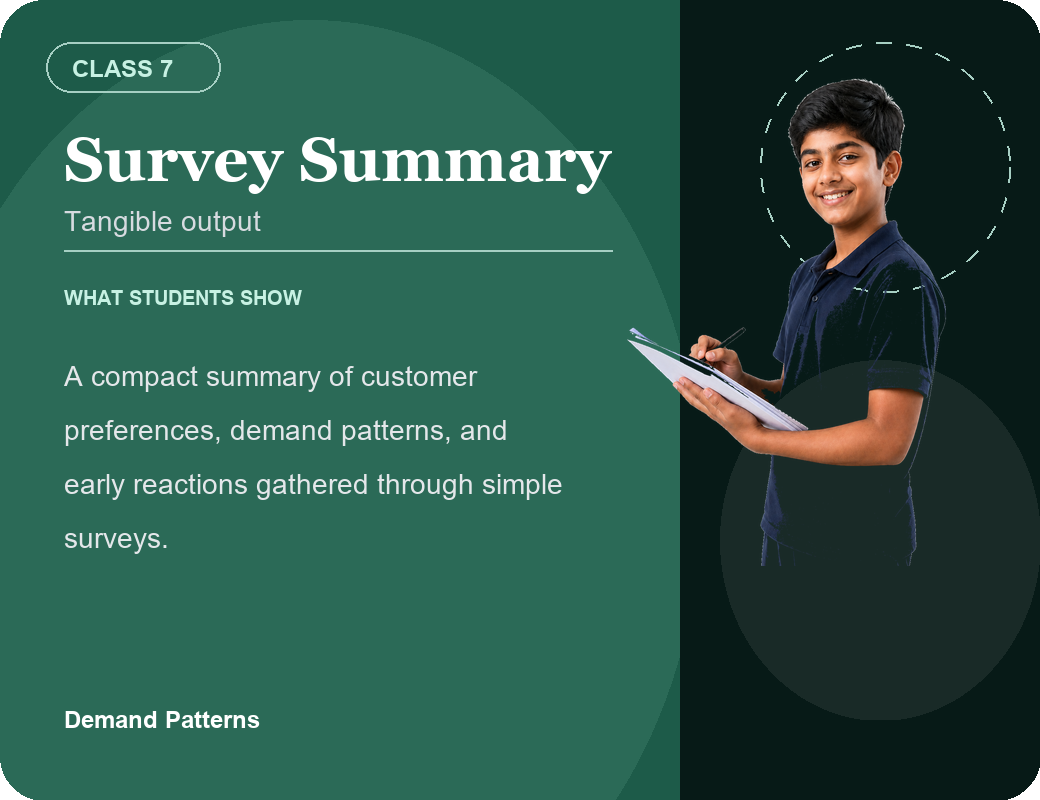
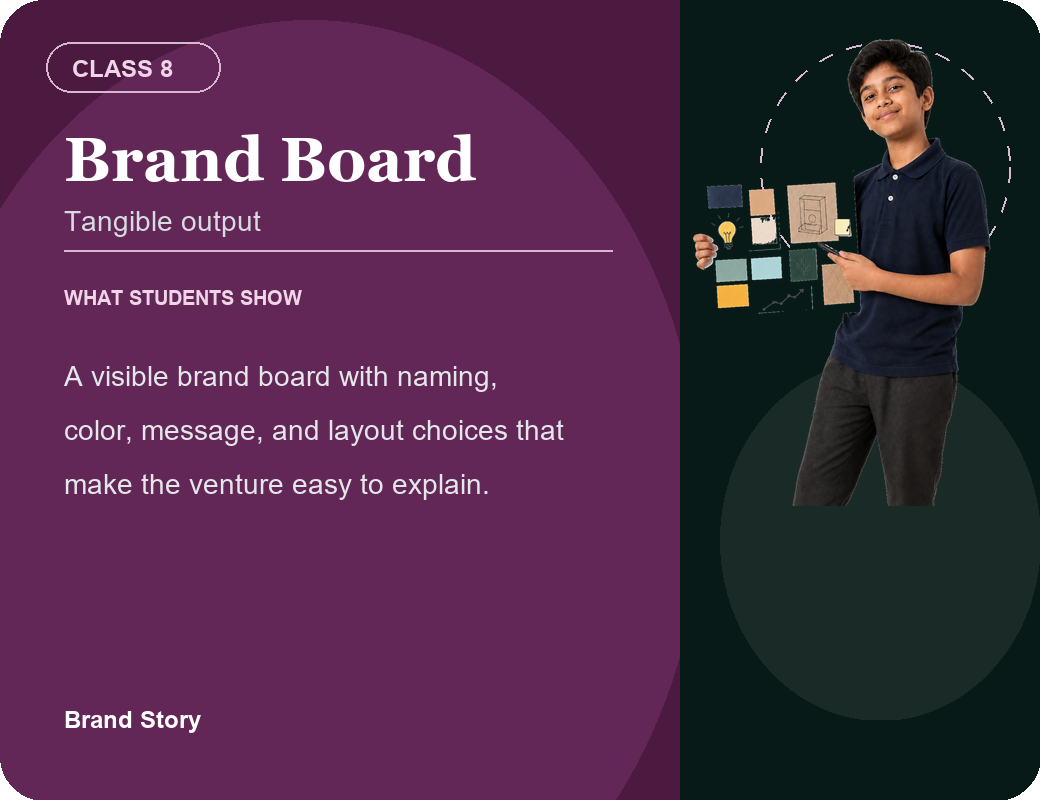
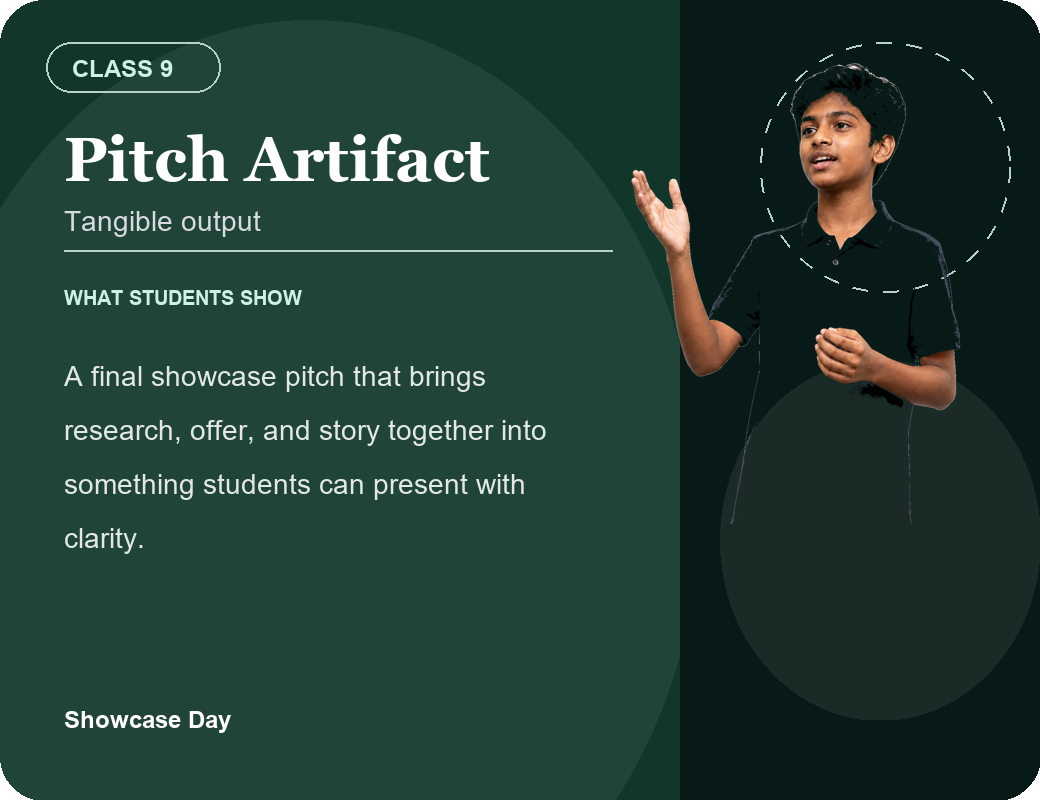
This program does not ignore the hard parts. It is intentionally structured around them.

Exam-time conflict
Cove runs on weekends and vacations only, so the offer never competes with school-time priorities.
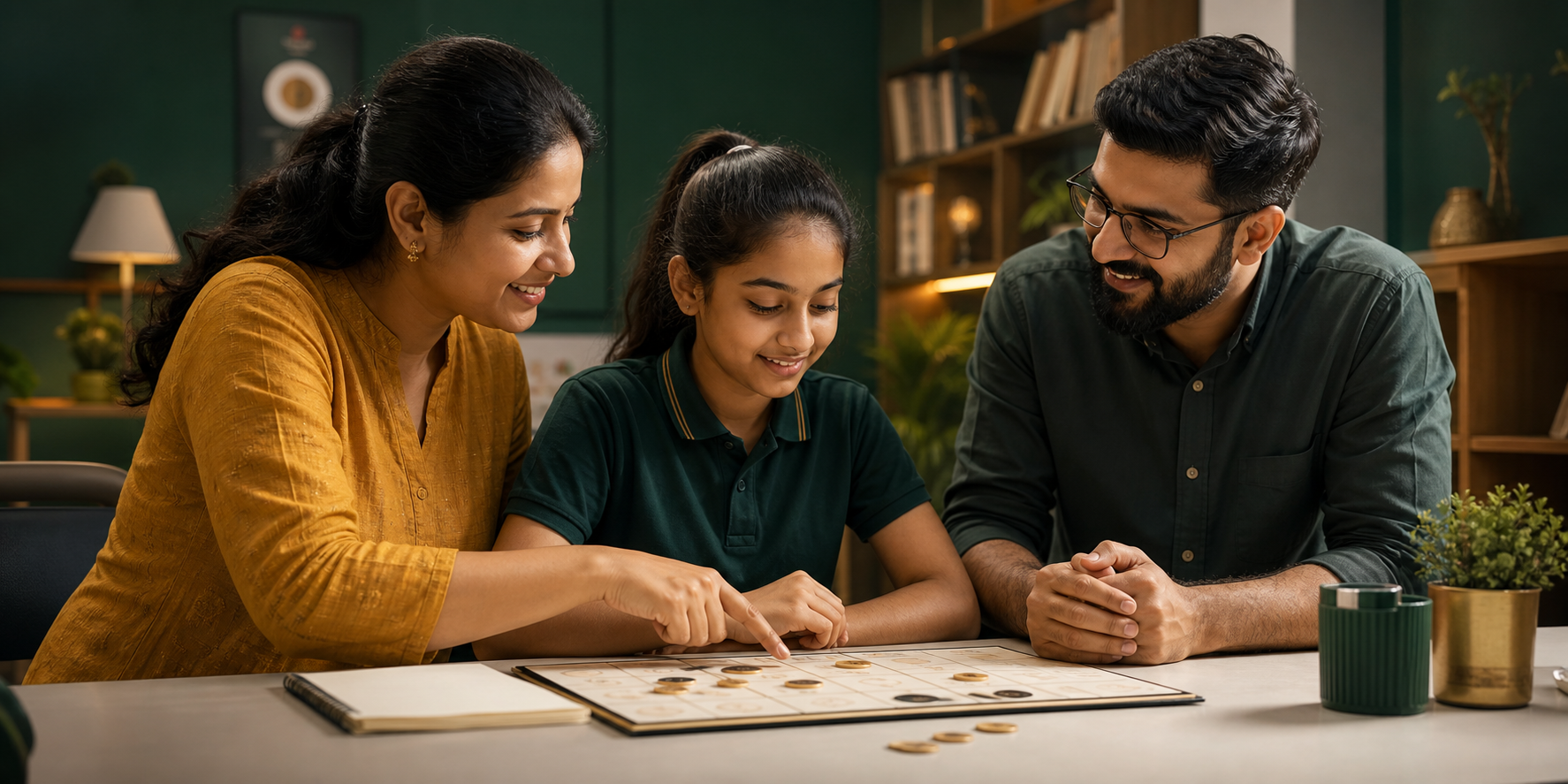
Cash handling by minors
Students use Venture Credits while any real sale money stays with parents permanently.

Mentor unreliability
Primary plus backup mentors and pre-scripted core content prevent a single dropout from breaking a session.
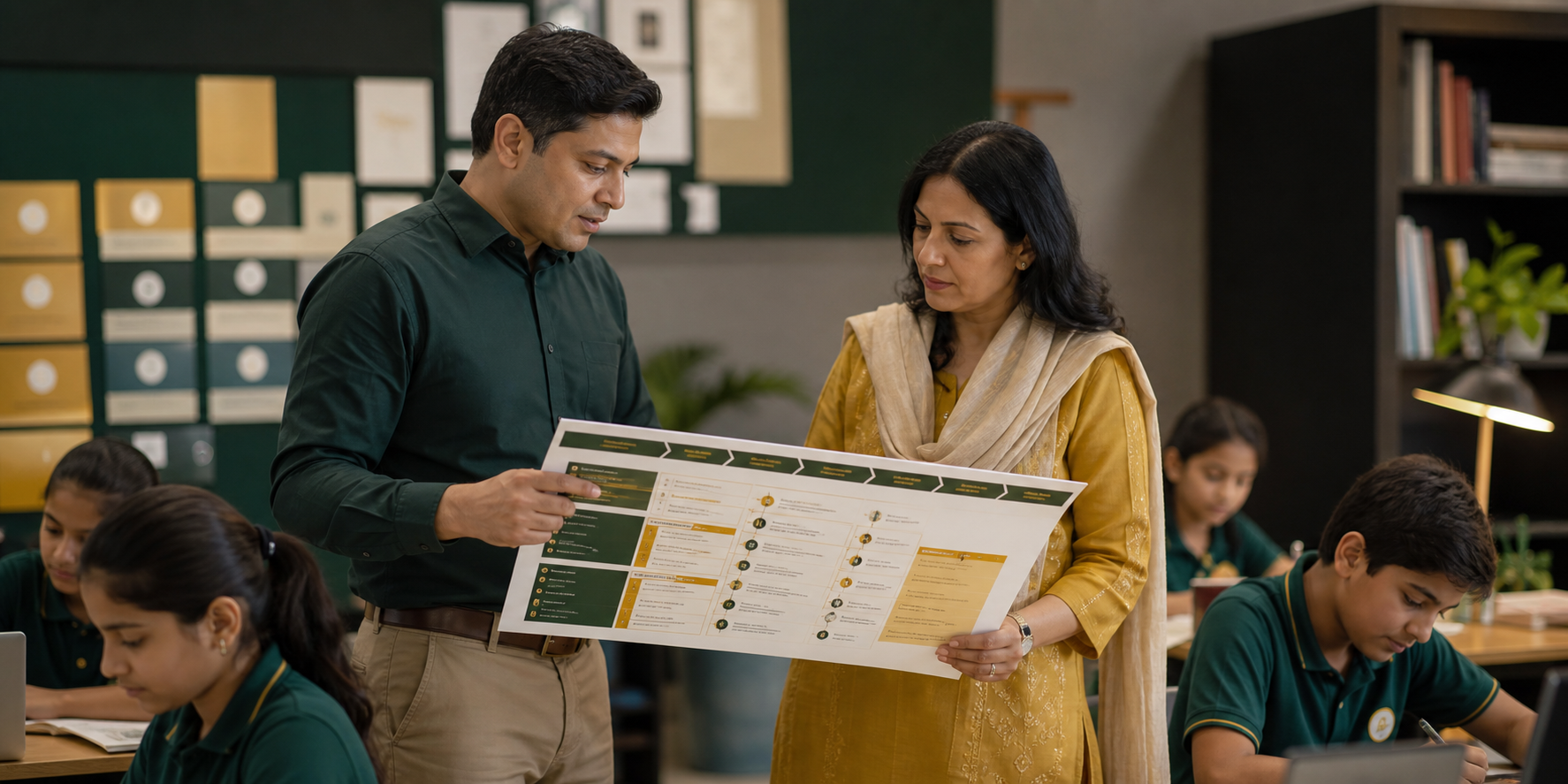
Pedagogy credibility
The curriculum is documented so parent trust does not depend on founder charisma alone.
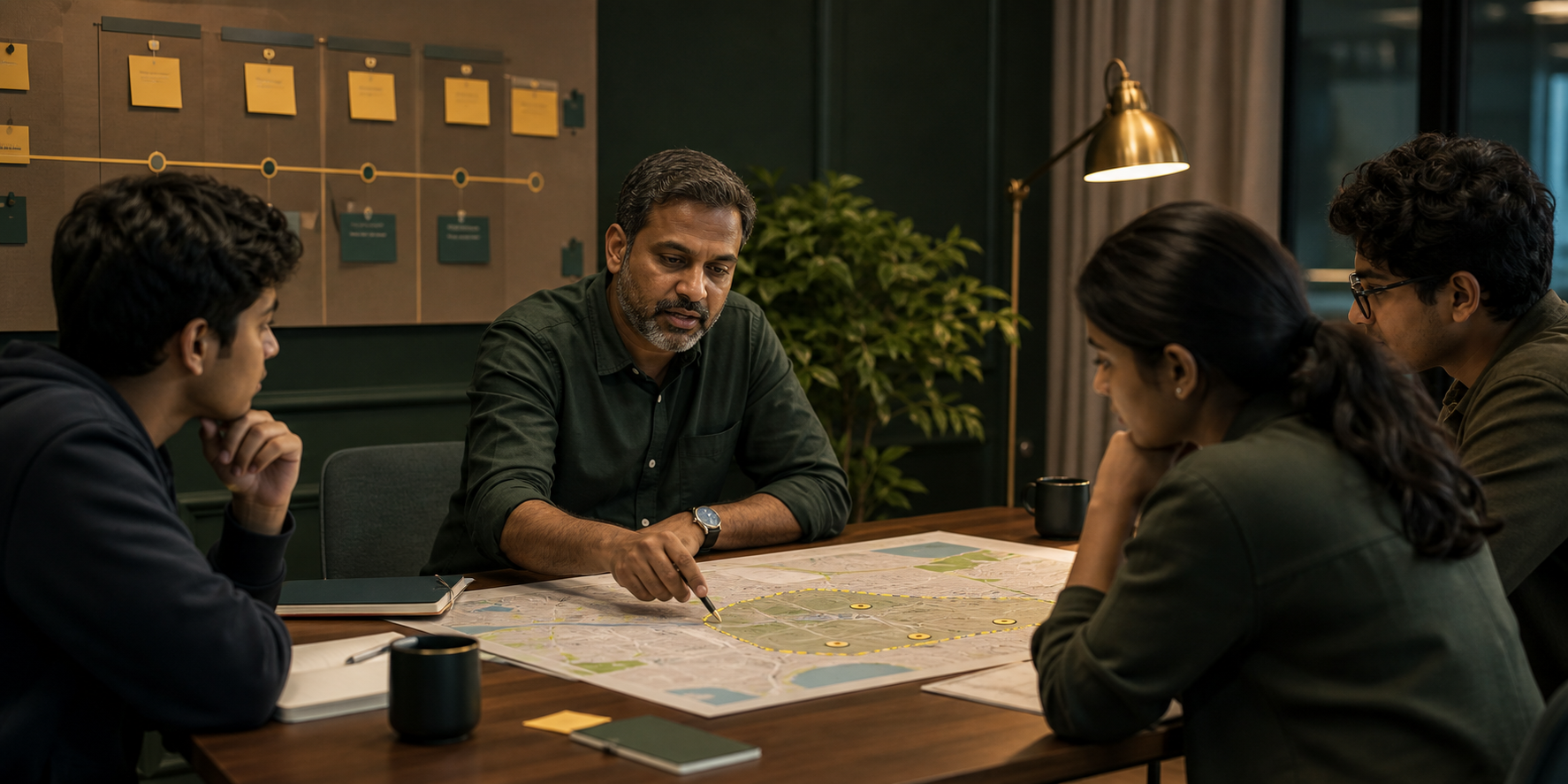
Founder overcommitment
The pilot stays bounded to one city, one partner-school setup, and one term at a time.
Retention uncertainty
Each term is priced to stand on its own, so renewals accelerate growth but do not keep the model alive.
Cross-cutting threads
Portfolio building
Artifacts compound year after year.
Mentor touchpoints
3 or 4 per term depending on grade.
Financial literacy
Complexity rises with age, never all at once.
AI fluency
Used for age-appropriate content, research, and communication support.
Class 6
Primary tools used
 Google DocsGoogle Docs
 Google SlidesGoogle SlidesGoogle FormsGoogle FormsGoogle SheetsGoogle SheetsCanvaCanvaFigJamFigJam
 Google DriveGoogle Drive
What students practice
Problem spotting
Teamwork games
Simple selling roleplay
Talking to first customers
Benefits for this class
Builds confidence by turning everyday observations into ideas.
Introduces money basics without pressure or financial risk.
Ends with a first-sale style capstone families can visibly understand.
Admissions pathway
Step 1
Families begin with a free Discovery Test built around business-thinking and problem-solving.
Step 2
Each student receives a Discovery Report, with an optional counselor call for families who want guidance.
Step 3
Group counseling and a scholarship test help families understand fit before they commit to a cohort.
Step 4
A short interview confirms readiness, then the family receives the next intake offer and onboarding details.
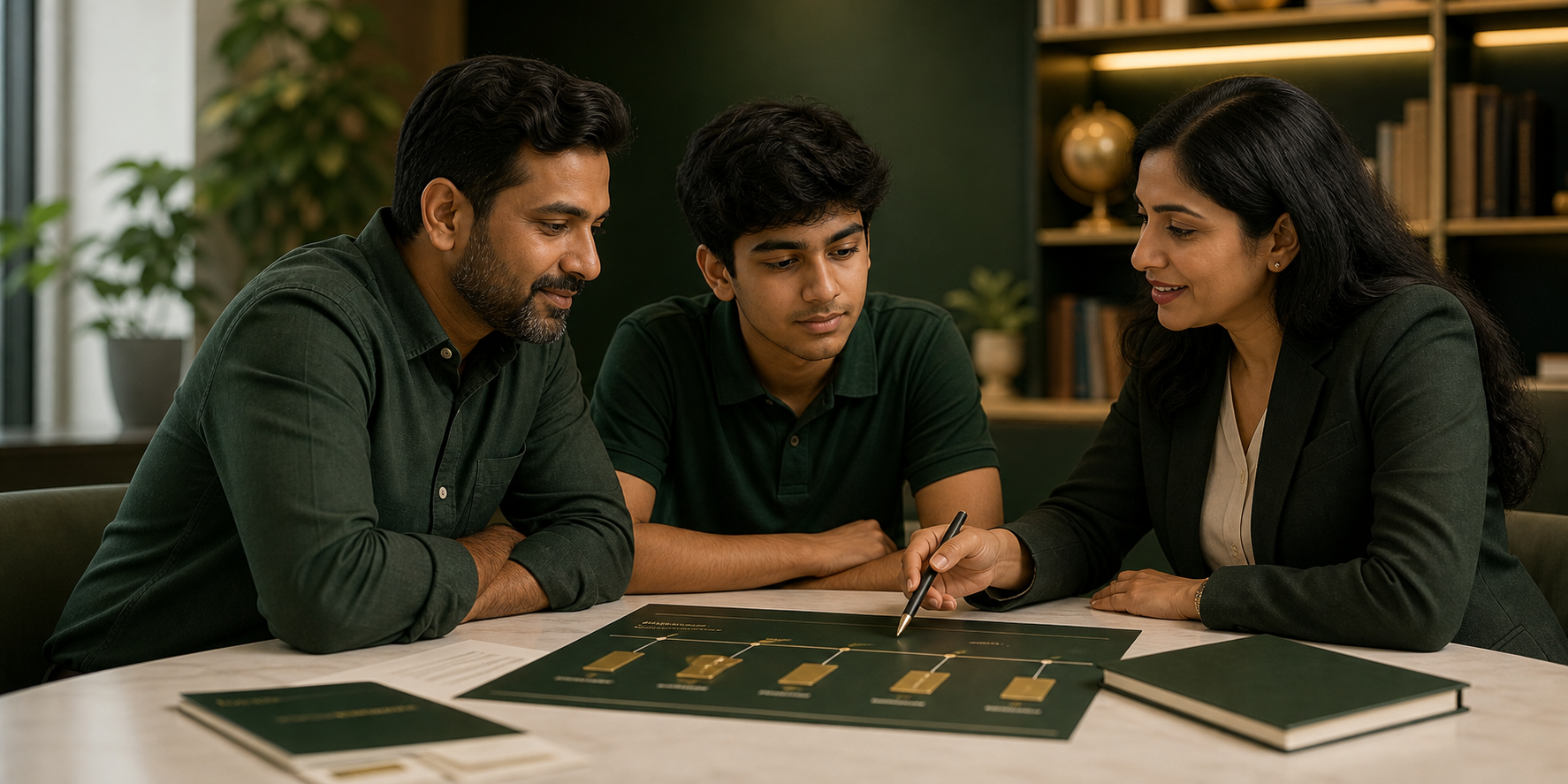
From first curiosity to final showcase, students move through clear milestones families can understand.
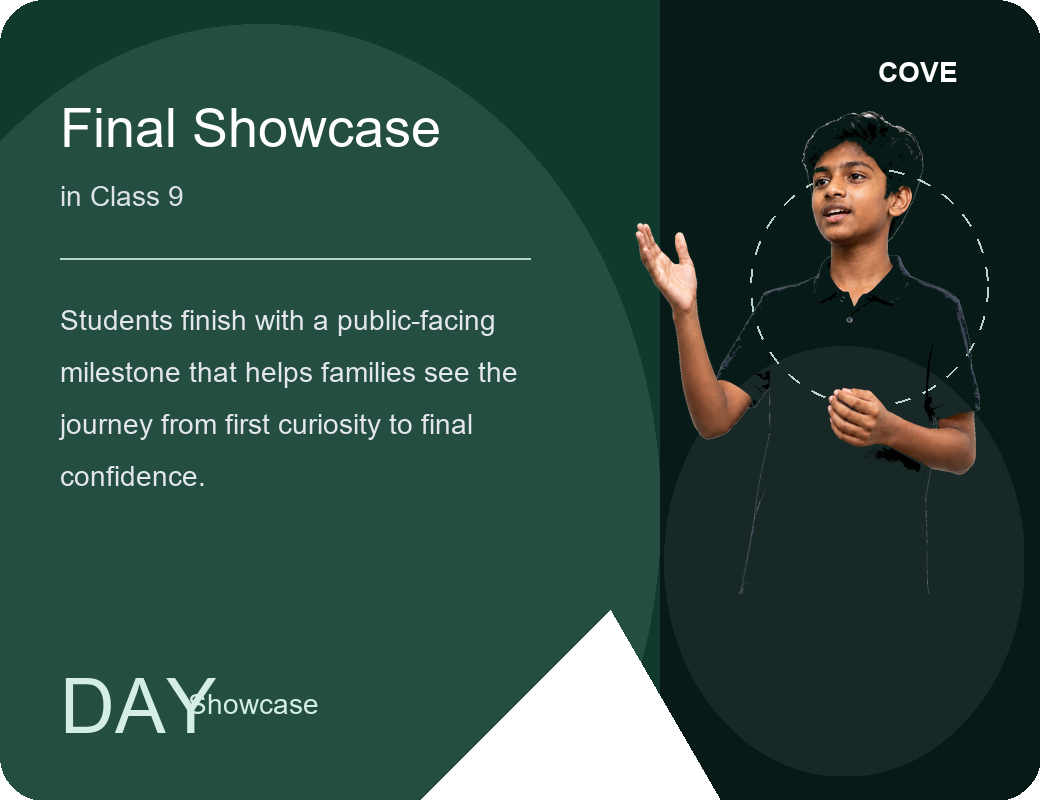
What families can expect
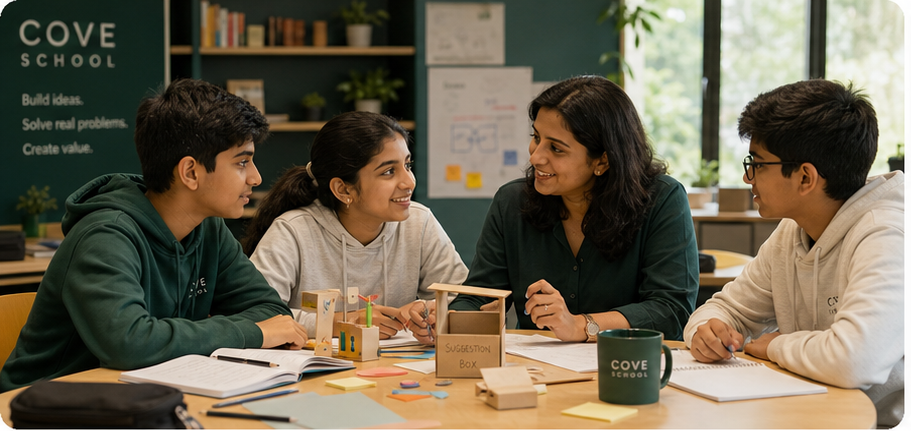
The program is intentionally simple to understand: small cohorts, guided sessions, practical tools, and visible outcomes.
How the experience is structured
12
Weekend sessions per term
3-4
Mentor touchpoints
1
Showcase finish line
Every term is designed to feel complete on its own, so students leave with a real milestone rather than a loose collection of activities.
What parents usually care about most
Small
Cohort feel
Real
Project work
Clear
Mentor guidance
Visible
Parent updates
Before term begins
Families understand the cohort, the schedule, and the kind of work students will be doing.
During the term
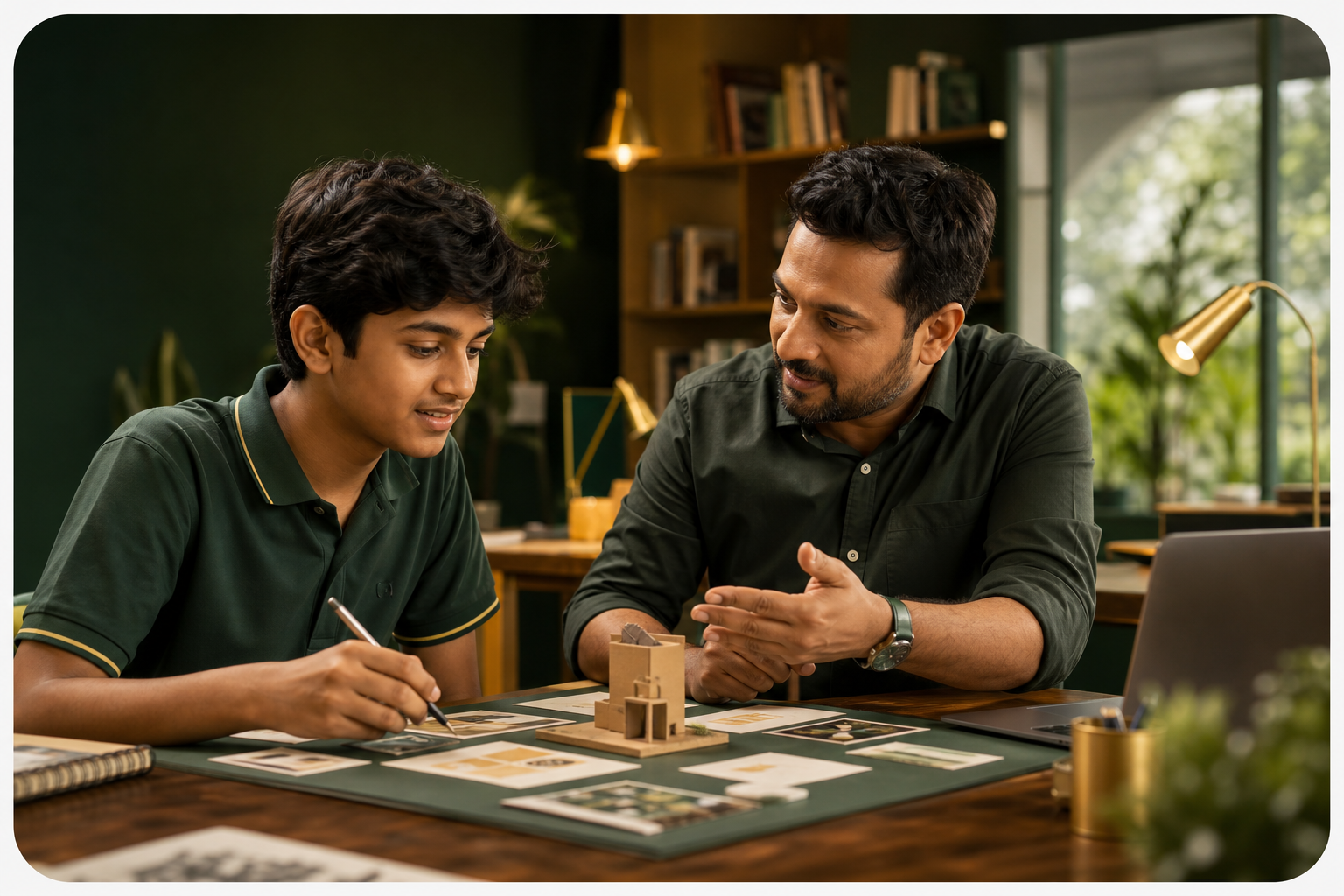
Students build through guided sessions, mentor touchpoints, and hands-on exercises that progress week by week.
At the end of term
Families can see the outcome through a portfolio artifact, presentation, or showcase experience.
Why families say yes to the first step
No right-or-wrong pressure
The Discovery Test uses real-life situations, so students are not judged like an exam paper.
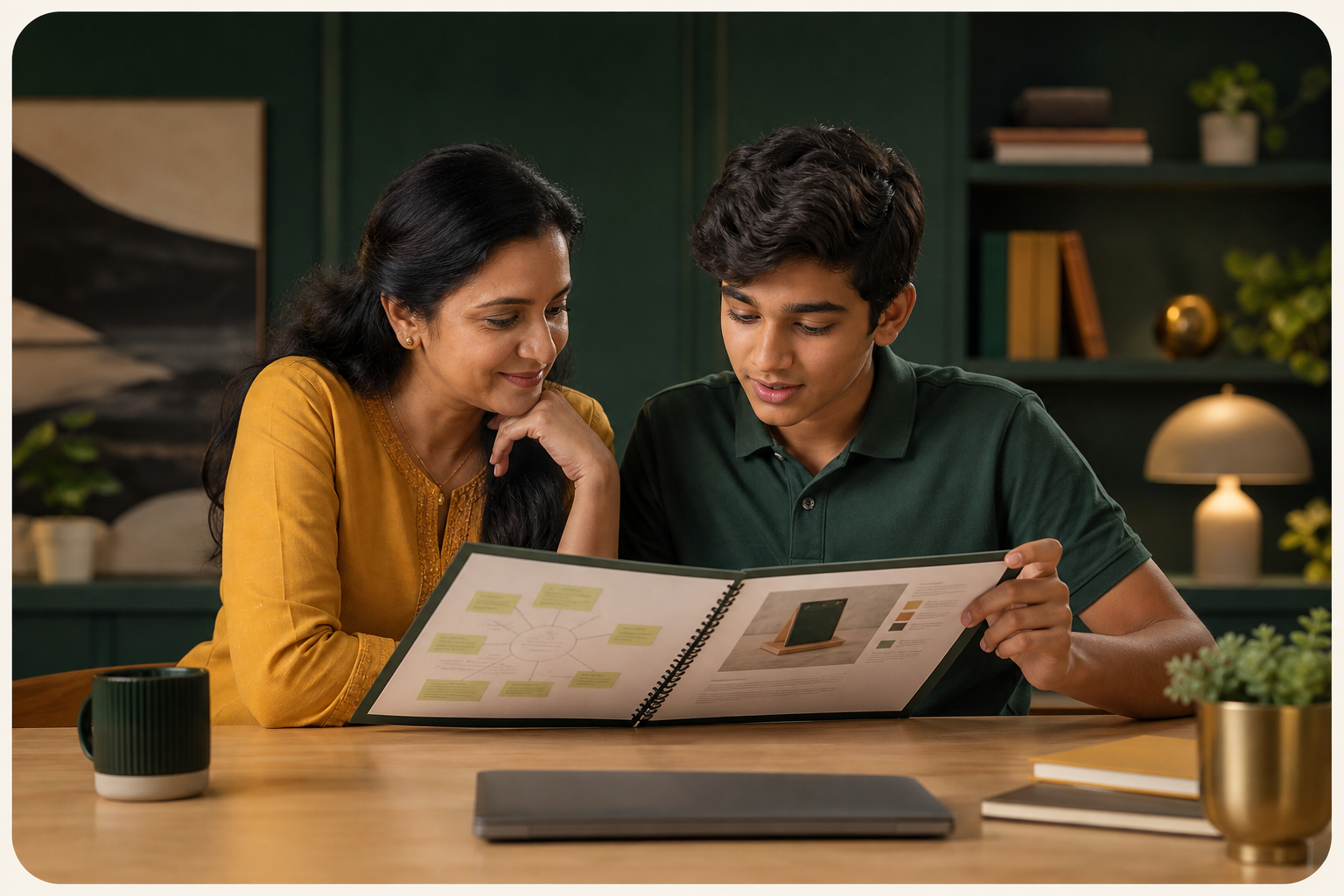
A report parents can use
Families get specific strengths, blind spots, and coaching suggestions instead of vague praise.
An optional counselor call
Parents can ask questions after the report without being pushed into an immediate enrollment decision.
A clear next stage if fit is strong
Only interested families move into counseling, scholarship, and interview stages for the cohort.



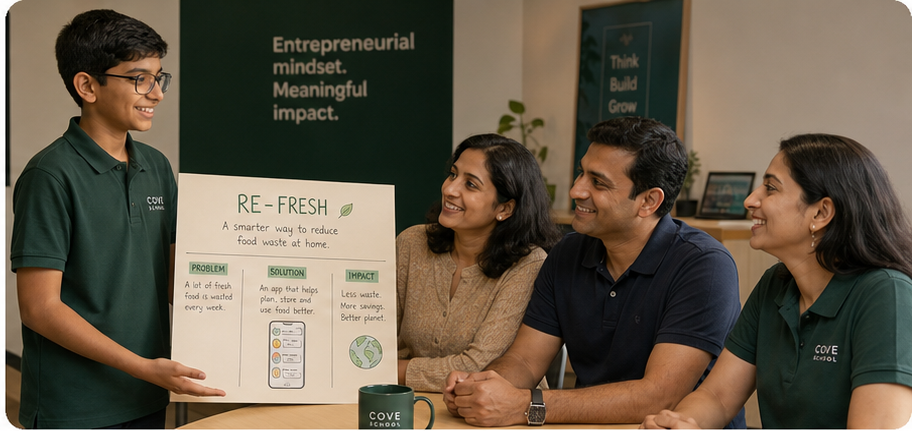
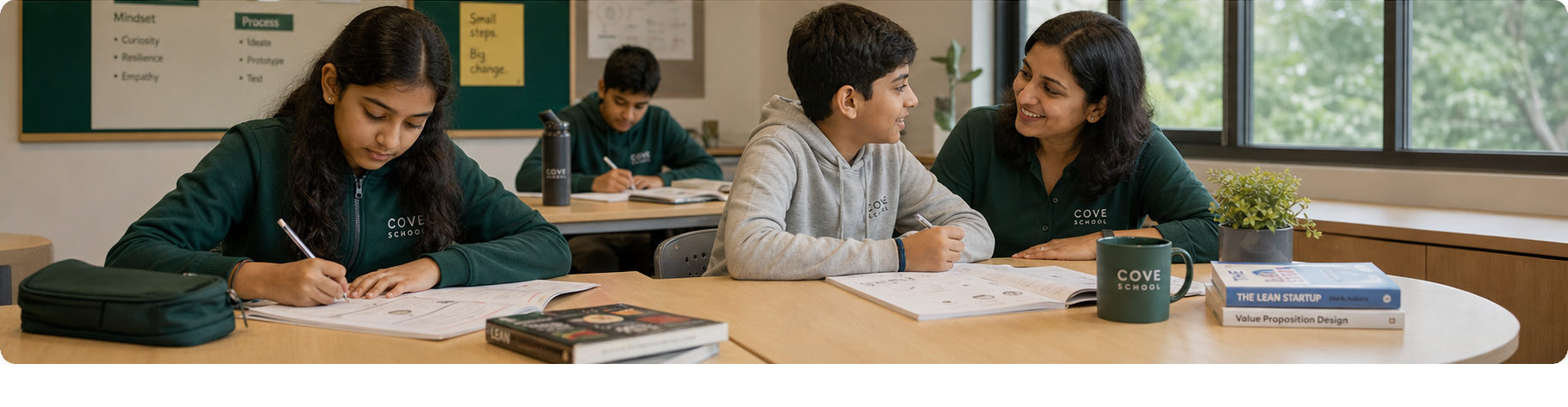
What parents receive after the test
Readiness Index
One headline score translates 20 responses into a simple readiness snapshot parents can understand.
Strength Zone
The top three behavioural strengths are highlighted so the child feels seen, not judged.
Growth Zone
The lowest-scoring dimensions become blind spots to coach, not labels to worry about.
Next-step suggestions
Every growth area comes with a practical mentoring suggestion, making the report actionable from day one.
These stories are a reminder that meaningful ideas can begin early. With the right guidance, curiosity can grow into confidence, initiative, and the kind of real-world thinking families want to see taking shape.
TeenFounders
Aaravv Kumar
Age 13, Class 9, New Delhi
Teen-led startup network
Kavach
Anoushka Jolly
Started at 9, built through school years, Gurugram
Child and teen wellbeing venture
byUdit
Udit
Age 15, started in school, Assam
Teen founder web venture
Snazz
Anoushka Poddar
Started at 13, teen-first brand, Mumbai
Teen personal care startup
What we can honestly say at launch
1
Showcase every term
12-15
Seats per batch
3
Terms per year
0
Weekday school disruption
Start with a free Discovery Test and student report
Who it is for
Grade band
Built specifically for Class 6 to 9 students
Parent-safe schedule
No weekday overlap with school or tuition
01
Take the free Discovery Test
Families begin with a low-friction first step that reveals how the child responds to business-thinking and problem-solving prompts.
02
Review the Discovery Report + call
Parents receive a written report and can book an optional counselor call to understand the right entry point.
03
Join the group counseling session
Families who want to continue move into a guided session that explains the learning model, fit, and scholarship pathway.
04
Unlock the scholarship test
Students who stay engaged continue into a deeper business-readiness test before final fit is confirmed.
05
Interview, scholarship, and enrollment
Shortlisted families complete a brief interview, receive scholarship positioning, and only then see final enrollment details.
| Class | Track | Mentor Touchpoints | Discovery Outcome | Scholarship Seat | Intake Rhythm | Capstone | Action |
|---|---|---|---|---|---|---|---|
| Class 6 | Observer | 3 | Observation + reasoning profile | Early scholarship consideration based on Scholarship Test score and interview | One cohort each term | Stall Day + reflection sheet | |
| Class 7 | Explorer | 3 | Questioning + research profile | Research-readiness scholarship awarded through test score and interview | One cohort each term | Research summary + concept one-pager | |
| Class 8 | Creator | 4 | Storytelling + launch-readiness profile | Creator-track scholarship awarded through test score and interview | One cohort each term | Brand book + launch assets | |
| Class 9 | Builder | 4 | Venture-thinking + presentation profile | Builder-stage scholarship awarded through test score and interview | One cohort each term | Venture plan + financial model |
Families begin with the Discovery Test, receive a report snapshot and guidance call, and then move step by step into counseling, scholarship, and interview stages only if the fit feels right. That keeps the first step easy, gives parents more clarity early, and allows decisions to build with confidence.
Before enrollment, parents should be able to see how the child thinks, where confidence already exists, and where guided business exposure could unlock growth.
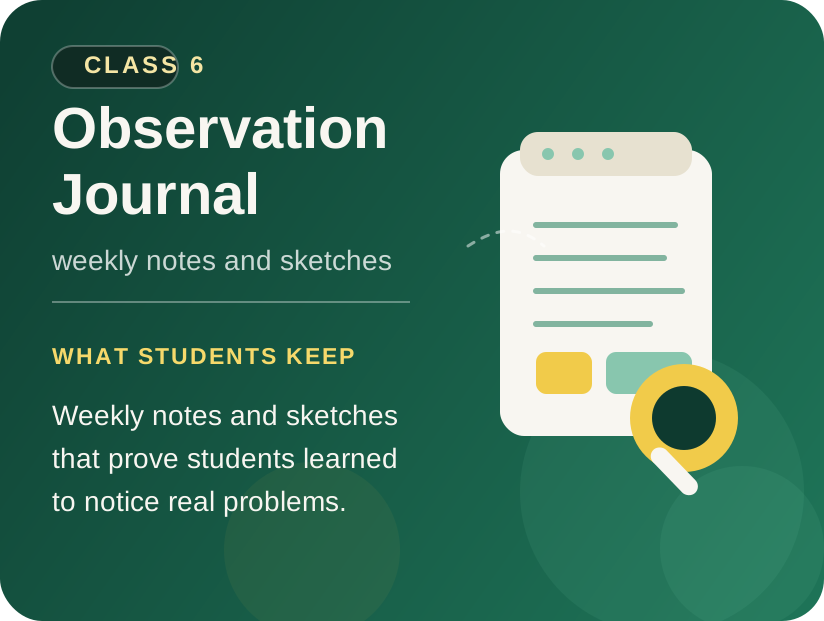
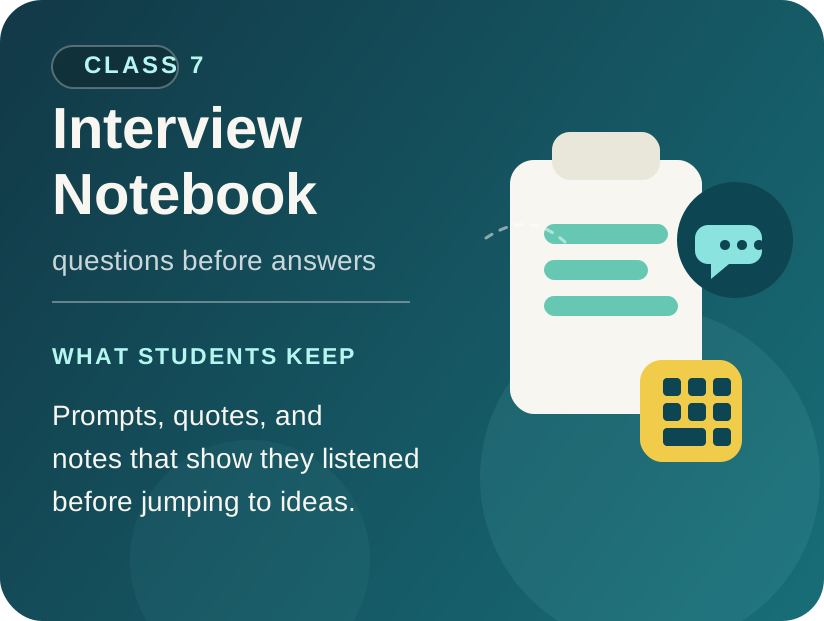
Zero pressure to start with a large upfront commitment. Families can begin with discovery before they decide on a cohort.
One optional counselor conversation after the report helps parents ask questions without turning the funnel into a hard sell.